Pages

Showing posts with label social media. Show all posts

Wednesday, 26 October 2016

23 Research Things - Thing 8

For Thing 8 I had a look at ResearchGate and Academia.edu. The handy side-by-side comparison provided by the Moore shows exactly why between the two I favour ResearchGate, even though it sounds like the name the popular media would give a scandal involving researchers. Just as Apollo, the Cambridge repository, has developed a "Request a copy" form on otherwise closed access records, I think the ability of students and academics to contact an author in order to circumvent publishers' paywalls is an important feature of a site.

Dec2010 20
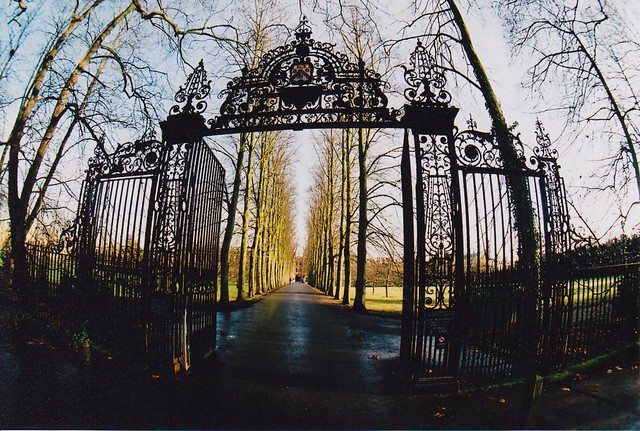
Opening the gates to connect people to the information they want is one of the key benefits of ResearchGate.
 As much as I teach people to be wary of illegitimate copies of papers online and direct them to openaccess.cam.ac.uk to ensure their manuscripts are archived in a way that meets legal, funder and publisher requirements, ResearchGate's facility to request copies is a service I certainly recommend to my user group when I reach a dead end trying to source things through Inter Library Loan.

I've had an account for a few months but, as fellow #23researchcam participant Luther noted, it may be a better service for people who have a portfolio of academic work to share and discuss. It's also one of several ways to follow academics you're interested in, provided they're active users. While Scopus can alert you when favourite academics publish, and the same service is available on Google Scholar if they have made their profile public, both Academia.edu and ResearchGate seem like a slightly more personal service, giving you the opportunity to comment and discuss as well as receiving updates.

Tuesday, 25 October 2016

23 Research Things - Thing 7

So far 23 Research Things has been chiefly an exercise in self-reflection. However, occasionally it has thrown in some prods to do something truly useful. This week, prompted by Thing 7, I've gotten my LinkedIn account out of mothballs and dusted it off a bit.

Generally I only update LinkedIn when there's a big change to make, like a new job or new project, or when I'm looking for work. Thankfully, I've been in my dream job for almost a year now, which means my profile and privacy settings were a little neglected. I took the opportunity to change my profile such that the public version is more minimal, turn off the spammy notifications and add a bit more description to my current job. I also joined a group from the list of recommendations LinkedIn provided. I went with Library and Information Research Methods as I do a fair amount of practitioner research-related stuff in my current role and it's definitely a topic I advocate for as well.

My feelings about LinkedIn are decidedly less strong in either direction than with almost any other social media platform, perhaps because it's about as bland and impersonal as social media gets. While it allows you to include information like activities and volunteer work, those appear as a black and white list, divorced from any context, descriptive language or images. It's one thing to list "fitness" as one of several hobbies and quite another to post a photo of myself, mud-streaked, bedraggled and close to tears of joy after completing a Spartan Race. While I'm happy for employers and potential contacts to know about that facet of my life, LinkedIn is not a place to be your expressive, unvarnished self. It's the web equivalent of handing a generic CV to someone.

(This shot won't make the shortlist for LinkedIn profile pictures despite being one of the proudest moments of my life.)

Those impressions aside, it is undoubtedly a useful tool. In addition to its functions as a digital business card, I use it to capture large scale projects, committees outside of work and other such activities that I would no doubt forget about between re-spruceings of my CV. Since it's generic it doesn't really give me the categories I'd like. I'd prefer to export my Symplectic profile to LinkedIn and make it possible to capture my professional development in categories like "Teaching" and "Conferences". Regardless, I feel like it's a valuable point in the constellation of my online presence, even if it does tend to go unregarded for months at a time.

Edit: I was just highly amused by the disparate points of view on LinkedIn between my post and this one by Librarian At Heart. I thought I'd clarify that I'm not really bemoaning the lack of muddy-faced photos of me on LinkedIn - that's definitely not the place for them - simply noticing how my ambivalence possibly comes from the austere nature of the site. Equally it's hard to feel like you're connecting with real people on LinkedIn. I suppose it's not necessarily more curated or polished than any other social media site, just polished in a particular way.

Friday, 21 October 2016

23 Research Things - Things 5 & 6

These days I find myself in a bit of a post-Honeymoon period with Twitter and often question what it adds to my professional life. The fact that many professionally relevant conversations and connections happen there is reason enough for me to want to remain but I think it tends to demand more than it gives. That's why I'm having a little difficulty summoning enthusiasm for Thing 5, an exploration of how Twitter can be used in research.

I teach academics about communicating and sharing your research and strongly encourage some form of non-academic dissemination, not only for increased citation rates but for practice communicating your ideas in different modes. Of course Twitter is brilliant for this for all the reasons discussed in the video for Thing 5, but it also depends on where people are comfortable and what suits their communication style. I am firmly of the opinion that Twitter should be optional, no matter what field you're in, and important work-related discussions shouldn't happen exclusively on Twitter just as business decisions shouldn't happen exclusively on the smoking terrace.
Twitter: the smoking terrace of our generation? (Does anyone else remember this episode of Friends where Rachel takes up smoking because her colleagues are making important decisions during their cigarette breaks?)
Part of the problem is the feeling one has on Twitter of shouting into the tempest. There is so much information being generated every second that it's hard to feel you're providing valuable content. For researchers the fear that what they're saying won't be of interest and won't even be noticed must be tremendous. Add to that the time spent setting it up, getting used to it and Tweeting enough to make the whole endeavor worthwhile, I certainly empathise with academics I talk to who just don't see the point. However, I do think it's important to give researchers the opportunity to reframe Twitter as an opportunity for a different kind of scholarship and connection. At its best, Twitter is highly adaptive, timely, grass-roots, creative, inclusive and accessible, which is why I'm still there.

Thing 6 deals with content creation/curation through tools like Storify. I have seen Storify used to link together tweets from a conference before but hadn't thought of it for linking longer thoughts or related items. I think Librarian Errant hit the nail on the head with their reflection on today's featured tools, writing:
I found today’s Thing a useful reframing of resources that I had not previously considered for use in a content-creation context. One of the things I’m considering doing as a result of the 23 Research Things Cambridge programme is start creating some kind of themed collections of links, in a location less ephemeral than Twitter. I had been intending to do so on my blog, perhaps making use of something like Pocket to gather the links together until I was ready to post them. However, I’m now wondering if Paper.li or Scoop.it might be better.
That's a use I wouldn't have thought of either. I do wonder how much more discoverable those resources would be. I have yet to be convinced that Twitter offers much opportunity of distinguishing the signal from the noise. However, I do think it's worth a try, even if I'm only curating resources for my fellow librarians!

Ideas for curated content (please comment if you'd find any of these particularly useful!):
- Conference poster design
- Practitioner research
- Embedded librarianship
- Productivity
- Bullet Journal

Friday, 14 October 2016

23 Research Things - Thing 3

When I teach academics about managing their online profiles it's with the notion of using social media to share research and to ensure that their work is associated with them, not someone else with a similar name. For me, the need feels less imperative because concerns of authorship aren't particularly high priority. However, doing the exercises from Thing 3 has reinforced that even if you teach something regularly, you can still improve your own practices.

I'm unconcerned that, in addition to my own online presence, a search for my name delivers a clinician, a blogger and a bassist. Actually, Googling myself is a fairly uneventful experience. Most of my public content is pretty generic and work-related since I have made efforts in the last few years to adjust my privacy settings, be a little more mindful about what I post and break away from the fear of missing out that has at times had me compulsively refreshing pages in case a new post turned up in the last 60 seconds.

My Visitors and Residents exercise

The biggest surprise for me was YouTube, which I didn't even consider as an online space over which I had ownership, hence why I forgot to put it on my V & R map. I consume content on YouTube frequently and have an account there, but what surprised me was that anyone could see my playlists and favourites. While there's nothing dodgy on there (apart from revealing my very random taste in music), I saved videos to playlists for myself, not for public consumption. I have gone through and changed all of that content to private now. Having checked my email accounts with haveibeenpwned, I am most concerned about my Tumblr accounts and will make sure I do my routine password change sooner rather than later.

Looking at my V & R map I can see that my online priorities are shifting from personal to professional: my map a few years ago would have been weighted much more firmly toward the upper right hand quadrant. Part of this shift relates to developing a workflow of "Personal on paper, collaborate on the cloud". But there is still a large degree of bleed-through between professional and personal. Unlike Librarian Errant, I put my name to my online identity, both personal and professional, and rely on privacy settings to ensure I am only allowing certain people into aspects of my personal life. Certainly this allows people to find my content in the professional context, but I do wonder how much I edit myself because I've put my name to things.

Ultimately I don't think there is one right solution. As the Visitors and Residents exercise demonstrates, public vs. private is relative; other people would cringe at the thought of posting things that I consider completely benign to share online. The main thing is to consider security concerns, and, as I teach my academics, that requires setting aside a little bit of time every now and then to figure out what other people find when they Google you.

Tuesday, 31 March 2015

Time to reflect

Lately I've really been enjoying my work. I've been able to choose projects I'm interested in including developing a series of UX studies to get a better sense of what direction the library should be moving in, I've built a pretty decent social media presence for the library, I've worked on redesigning our webpages and I've started thinking about in-house outreach we can do to help our students engage with our historic collections.

This has come out of a situation that initially I found absolutely awful, however: one in which I got very little feedback and had very little direction from above. I've learned to not let it bother me, assuming that the lack of feedback is a good sign, and the bits of feedback I have had are all positive. It was simply not a situation I was used to and I eventually had to come to terms with the idea that the freedom to shape my own role came with a lack of direct mentoring and oversight that I've tended to rely on my whole life. It took me this long to realise, though, that there is a way I can get feedback: I can get it from myself.

So, I'm going to do a bit of reflective writing on what I'm doing and where I see it going. This is primarily an exercise for myself, but I'm sharing it because I hope it's interesting or helpful to someone else too.

User Experience (UX)


After my recent write-up of the class I took from Georgina and Meg, I've started looking at studies I can do in the library. This morning I've finished a proposal for a series of studies that will culminate in a report including recommendations about where I believe the library can improve in terms of UX.

It's become a bit of a preoccupation of mine lately, thanks to Cambridge hosting the UX Libs conference. I didn't get to go to that but I followed the conference's Twitter hashtag (#UXLibs) avidly and got involved as much as I could, including going to see the final pitches and chatting with some of those involved.

Embedded image permalink
A meme based on Heidegger's phenomenological terms for users' experience of technology. Source: http://twitter.com/HogwartsUXLib/status/580280726421147648
I'm not sure where I'm going with UX other than it's a tool I find really interesting and useful and I want to have it in my toolkit. Like that thing on Batman's utility belt that has a grappling hook shaped like a bat and an unbelievably strong wire that can apparently hold the body weight of several fully-grown henchmen and at least one Boy Wonder. I want to keep reading about UX and I'm looking forward to actually doing some studies of our users. I admit I'm a little intimidated by the idea, but excited by what insights we'll gain by doing them. More on those later, I'm sure.

Outreach


Last Thursday I attended an Oxford/Cambridge College Libraries exchange. It was hosted in Oxford and I gave my first ever conference-type presentation, about my library's digitisation project and how we are promoting it through social media and other channels. I got really nice feedback from that and despite how nervous I was I think I did okay. As with any conference, though, the best part was the conversations after the presentations. I met some really nice people and had some great talks.

My favourite presentation of the day was by a couple of college librarians talking about getting students to access historical collections. I loved their ideas and they really pushed me out of my self-created digital pigeon hole. They had some great, creative ways of increasing the visibility of librarians and historical collections to members of the college and I can't wait to propose some of them to my manager.

Social Media


Probably one of my proudest achievements has been the social media presence of the library, but I am certainly not perfect at it and I am learning a lot as I go along. The more I engage in professional and academic conversations on social media, the more I learn and the more excited I get about it. I think I find this arena very comfortable, though, because of its anonymity and the lack of personal contact. I am trying to be aware of how easy it is for me to slip into a mentality that assumes social/digital media is all the outreach you need. In my own experience, face-to-face outreach is still by far the most effective.

Oddly, I've also learned a lot more about Twitter in the last couple of weeks through using a fake account. It's highlighted for me some things I do wrong or that others to right, it's helped me think about things like voice, timing and so forth more than my personal or work accounts have. It just goes to show you that you never know where you're going to pick up useful skills.

Where am I going (and why am I in this hand-basket)?


A lot of people don't realise how many different directions there are to go in librarianship. Outside of libraries many people I know assume that it's a straightforward hierarchy, the top of which is Head Librarian and that of course that's everyone's goal. The fuzzy, diaphanous nature of information science these days, though, means that these old hierarchies and traditional roles are breaking down, if they ever really existed in the first place. There are dozens of distinct library/information roles I could reel off without much thought, and probably dozens more I haven't heard of. In ten years there will probably be even more library roles that we haven't even considered yet. Still, between CPD courses, CILIP Chartership, networking etc. I've been given the distinct impression that most library folks know pretty much where they want to go and how they want to get there.

Can I really be the odd one out for not knowing what I want to be doing in ten years? Or five? Or one? Is it so important to have a set destination in mind? This time last year I would have been vehement that it does matter and that anyone who said otherwise was probably unambitious, as if that's the worst thing you can be. I don't really know what I want for me, but I know what I want for my library in the next year, or five, or ten.

I want it to be better, and if I can help make that happen, that will be awesome.

In conclusion: the state of Library Sphinx


Ultimately I think if I were to give myself feedback about all of this, I'd say that I'm doing interesting research and coming up with good ideas but where I fall down is in having the guts to implement them. Because I don't have someone telling me to do a UX study, or arrange a library literacy course, I tend to balk when it comes to actually doing it. I need to be braver and see my ideas through. The OxCam conference showed me that doing things I'm intimidated by can be a great learning experience and a lot of fun. It can also open up new opportunities and ideas that I wouldn't have encountered otherwise. 

So, Self, be brave, be open to new experiences and keep working hard to make libraries more awesome. 
Tuesday, 25 February 2014

When it comes to libraries, not all change is (necessarily) bad

Photo by Humans of New York, posted 25th February, 2014.

On Tuesday 25th February, Humans of New York posted a photo of a man eating chicken on the street outside a branch of the New York Public Library as part of their photojournalism series. The man asked that in return for appearing in the photo, they broadcast a message for him:
"I work at this library. And before that, I was coming here for twenty years. It’s my favorite place in the world. As many people know, the main reading room of this library is supported by seven floors of books, which contain one of the greatest research collections in the world. Recently, the library administration has decided to rip out this collection, send the books to New Jersey, and use the space for a lending library. As part of the consolidation, they are going to close down the Mid-Manhattan Library Branch as well as the Science, Industry, and Business Library. When everything is finished, one of the greatest research libraries in the world will become a glorified internet cafe. Now read that back to me."
There was a resulting uproar from library fans around the world commenting in support of the anonymous chicken-eater (Tumblr introduced the tag #angrylibrarianeatingchicken), encouraging people to sign a petition to the mayor to keep the branch open and so on. Such outpourings have had great effect in instances like the Pulaski County Public Libraries and slightly less success in UK branch libraries.

However, this David and Goliath story was not exactly as it first appeared. Humans of New York contacted NYPL and later the same day posted this clarification:

 "Because of all the attention of this morning’s library post, I thought it’d only be fair to post the NYPL’s response. I’m quoting four points that they’ve asked me to clarify:
*The man says “I work at this Library.” Ends up, he doesn’t “work” for the library in the sense of being an employee. He is probably doing his work at the library (millions do each year!). We fear the confusion might make people think he is offering his opinion as an employee.
*The vast majority of research books will remain on the site (in far superior storage conditions)
*None of the public spaces he and others enjoy will change, and we’ll be returning a circulating collection to this main library (it had one for its first 70 years).
*This plan will be greatly expanding access to the library. The renovation will allow all New Yorkers–scholars, students, educators, immigrants, job-seekers– to take advantage of this beautiful building and its world-class collections.
Obviously the issue is more complex than soundbites from either side, so feel free to educate yourself further and form your own opinion:
http://lmgtfy.com/?q=NYPL+renovation+debate"

I wanted to bring this instance to the attention of my reader(s) as an example of the in turns gratifying and infuriating passion some people have for libraries. While I of course laud the intense loyalty many show to libraries, there is often the knee-jerk assumption that any change undertaken by a library is a) the result of budget cuts alone and not influenced by other factors such as demand, usage statistics and so-on, and b) is a change for the worse. Perhaps these people feel protective of libraries, viewing them as both timeless and defenceless, and get a sense of satisfaction from crusading on their behalf.

However, libraries serve very diverse purposes. Some are historical records of a particular collector, institution or country and for them change would be potentially cataclysmic. However, for modern libraries that serve a user base, change is a necessity borne of the changing needs of the communities they serve. Sometimes this means growth and sometimes it means consolidation. I am not familiar enough with the intricacies of this particular branch to comment on its impending changes, but I think it is worthwhile to point out that a conservative attitude toward libraries can actually be worse in the long run, allowing them to slip into irrelevance rather than remaining vital and central to their users' lives.

Libraries are never going to please all of their users, but the assumption that the public knows better than the librarians who are making these decisions is symptomatic of the attitude that dismisses libraries as static institutions and devalues librarianship as a profession. Try talking to librarians about why changes are taking place before jumping to the conclusion that it is for sinister reasons. Libraries are there to serve their communities, so if you have genuine concerns, get in touch with the librarian before starting a campaign. Some libraries do need protecting, but not all change is (necessarily) bad.