Pages

Showing posts with label libraries. Show all posts

Tuesday, 26 January 2016

Whales, games, conferences and teaching

Apologies that my blogging has been a little like the sporadic surfacing of a Cuvier's Beaked Whale lately! I have a lot I want to reflect on and, as I've said previously, the times when I feel least like I have time to reflect are precisely the most important times for me to do it. (I wonder why I use breathing metaphors so much when thinking about reflecting...) So I'm sticking my head above water to give a quick update to reflect a bit on what has been going on since I started my new job in November.


  • Attended a course on game design for libraries put on by the CILIP School Libraries Group. I was pleasantly surprised to find that this was being taught by some HE librarians and they were talking about the HE sector for the most part, so the content was very well suited to me, but it was also fantastic meeting and talking to lots of librarians from school libraries. We don't often get to meet school librarians in HE but I was struck by how different the support for information literacy is in the different schools. It reinforced the idea that we can't assume what undergraduates arrive knowing because just within London there is very different exposure to critical reading and information literacy depending on the school.
  • Attended various talks by the fabulous Office of Scholarly Communications. These guys just seem to get it. They just formed last year and already they're tackling a lot of big issues facing researchers such as open access, open data, and managing one's online profile. This overlaps with some of the work librarians are doing but rather than fighting for supremacy, the OSC have made sure to leverage the might of librarians in Cambridge, providing training and ensuring that we have a lot of buy-in with what they're doing. I think it's absolutely brilliant - rather than having to navigate the vast and confusing information "out there" online, we have a local resource I can point people to and in turn they're making sure librarians are better prepared to answer some of the questions we get from academics. Big shout out to these guys! Check out their blog as well - it's well worth a look.
  • Attended the Libraries@Cambridge conference. I was also one of the live bloggers for this event. You can read my hastily typed post on the first Keynote Address here! It was my first time at this event and I was very impressed. I like going to external events like the CILIP SLG course because of the chance to meet with people from diverse backgrounds but it was clear from the conference that there is huge diversity within library roles just in Cambridge.
I've been learning quite a lot in my new role, helped along by my brilliant co-workers. From my perspective it's a relatively small team, but there's a lot of interlocking expertise. Some of us overlap in places but we also complement each other's expertise very well.

The big thing on my mind at the moment, however, is teaching. For a very, very long time I've known that I wanted be involved in education in some way, just not in front of a classroom day in and day out. (I have respect bordering on awe for those who can summon the energy to do so and do it well!) This meandered from thinking about tutoring for a non-profit to interpreting heritage sites for visitors to doing museum outreach and education and lately being focused on information literacy education through libraries. I've taught roller skating with the local roller derby league and absolutely loved it - the feeling of helping someone "get it", of breaking things down to help them, giving pointers and knowing when to step back and let them practice on their own.

So I was fairly nervous but also excited when I found out I was to begin teaching last week! I've taught a couple of sessions so far and I think they went pretty well. Areas I want to work on are deepening my knowledge of the areas I'm talking about so I can speak with a bit more understanding and developing a storehouse of pertinent examples for each point. What I think I'm good at: being engaging/holding people's attention, appearing relaxed even when I'm feeling nervous or flustered and developing sessions that take into account different learning styles. I think it's a little early to start making much deeper statements about teaching. I can certainly see how it is an incredibly dynamic process learning to teach!

There is a lot more going on at the moment that I would love to get into, such as the UX study for which I'm currently applying for ethics approval, and my new-found evangelism for Open Access, especially at moments when I'm dealing with tricky Inter Library Loans requests, but I will save those for another time!

Saturday, 9 May 2015

ARLG: Communicating with our users.

Yesterday marked my first CILIP event as I attended the course "Communicating with our Users" as a delegate. The speakers were Angela Cutts and Emma-Jane Batchelor (Faculty of Education), Cambridge, Jane Helgesen (UEA), and Libby Tilley filling in for a poorly Georgina Cronin (from the English Faculty Library and the Cambridge Judge Business School libraries respectively), while the delegates represented a range of libraries from places like Norwich, Cambridge, Nottingham, Hertfordshire and Hull.

As a thoughtful and caring group of librarians, the delegates had little trouble answering the prompt, "Why communicate?" Reasons cited included understanding our users, building relationships, breaking down barriers and being able to better tailor our services. Of course there are ways in which communication benefits us in terms of marketing library services, busting myths about who we are and what we do and even simply informing people that we exist. But communication is very much a two-way street with benefits for everyone if it is done effectively.

Done poorly, communication is effort down the drain. Photo by Lucy Welch.

A quick exercise listing ways in which libraries can engage in real-time vs. any-time communication revealed the vast number of ways we try to communicate with users, but equally (if not more) significant are the ways in which we unconsciously communicate. We were asked to put ourselves in our users' shoes and imagine what is communicated to our users unconsciously when they step inside our libraries. Those libraries with grand atriums devoid of books and comforts might look imposing, institutional, or more like a hotel than a library. My library is much smaller but on walking in there are no clear directional signs and staff are practically hidden behind a ridiculously tall desk that my shorter colleagues struggle to even see over the top of. I have always felt that this physical barrier forms part of a larger psychological barrier between us and our students that keeps us from communicating.

The issue of formality vs. informality was discussed quite a bit and forms another unconscious method of communication. Whether you address users in emails with "Hi, ______" or "Dear _______", whether you wear jeans and trainers to work or have a business-like dress code or wear sparkly lanyards, whether your Tweets sound funny and human or like they were generated by a computer, these things can set the tone for communication and are very dependent on the user base at your library. Emma and Angela work with many professional teachers and as such they feel more formal communication is needed, whereas Libby is on first name, "Hi, ______" terms with her predominantly undergraduate student base. And while Emma and Angela have developed the implict dress code of "dress like a teacher", Andy Priestner and his staff at the CJBS library "embrace the informal" and dress in the same sort of jeans, trainers and other comfortable clothes that their users wear. It may seem of little significance but clothing, tone and other subtle ways in which we portray ourselves communicate huge amounts. It's not only what we say but how we say it that either breaks down or puts up barriers.

The only time I wear jeans to work is on Saturdays.

This gave me a lot of food for thought. In my four years in my current job I have only ever worn jeans to work on Saturdays (as in the photo above). I'm not overly formal, given that the orange converse, my Doc Martens with a hole in the toe and my brogues, which are in an advanced state of decay, have all made regular appearances at work. But I had always wanted to be recognizable as a professional, both because I look close enough in age to the students to often be mistaken for a student rather than a professional librarian and because I felt that if I dressed formally it would help communicate to students that librarians had more to offer than just stamping books. Also, it would not feel entirely right to supervise visiting readers at the Wren Desk wearing shorts and a t-shirt while many of them wear shirts and ties for the occasion. However, I will have to give serious thought to the discussions we had yesterday and the article I posted above. As Andy said, "Clothes don’t make you professional." Would it help break down the barriers between staff and students if I wore jeans to work during the week? Do the trousers, shirts and blazers instill a sense of confidence in students that I am a responsible adult who is capable of helping them? I don't know. As all of the speakers said, communication should be tailored to the user group based on understanding and in those terms I'm only just getting to know who our users are.

The main thing is to be strategic about communication. We brainstormed words that apply to communication for each letter of the SMART objectives acronym and it turns out that librarians are rather good at coming up with synonyms:
Putting thought into all of these aspects and tailoring them to your users will maximize the impact of communication meaning that your time is being well spent. Angela and Emma went on to look at specific examples of how they used multiple channels to communicate on a single aspect of the service. Their fun, engaging efforts were carefully timed, tailored to their users and were very eye-catching, but they always had a purpose behind them. Their "Will you be my borrower?" display for Valentine's Day, for example, generated crowd-sourced book recommendations. While they had fun making art-and-crafty DIY displays, the thought behind their outreach was methodical and I was impressed and inspired by how interconnected their displays, social media output and in-house events were. There was always a reason or a catch behind all the fun. It was always communicating something about the library's services but doing the double duty of helping users see the library staff as approachable and human.

I won't go into the excellent and exemplary case study presented by Jane Helgesen about communication with users during a project to redesign a space in the library. Suffice it to say that it provided me with many ideas about how we might approach a major redesign of the library if it ever comes to that. The main point I want to bring up from her talk was the importance of staff buy-in for effective communication. Faced with the difficult task of getting students excited about the library re-development (rather than irritated by the disruption to their studies), Jane ensured that everyone on the library's staff were well informed so they could give consistent, on-message information to students. Staff needed to be "clear and confident about what was going on," and their enthusiasm for the project could then spread to the library users. This was achieved through regular meetings, emails, and a shared folder that was regularly updated to keep staff in the loop and feeling empowered. It was a great example of how good communication is a holistic way of approaching libraries, not just a marketing tool to be exploited.

Communication is about understanding, give and take and being serious about not taking yourself too seriously.

You can get some different perspectives on what was discussed from the excellent live Tweeters by reading through #arlgcomms on Twitter. It was a great day, topped off with a tour of the Dawson Books warehouse, where Lucy and I, bedecked in hi-viz vests, came over all geeky about conveyor belts, industrial scale book shelves and a very satisfying machine that folds cardboard boxes. Thanks to the ARLG and the organizers of this event for a really nice day!

Lucy and I take a hi-viz selfie in the Dawson Books warehouse.

Friday, 17 April 2015

UX study for a large college library


As I mentioned in a previous post, I am working on a series of UX studies over the coming months to gain a better picture of the experience of users of our library's services. I didn't want to cast the net too wide, because there is ongoing research by others on the experience of students using all of the libraries available to them, how libraries fit into their working lives etc. Also the final result of these studies will be a report that I will present to the Librarian of this college library with my recommendations for what we might do to improve user experience, so while a broader view will come into it, the focus of the study is on this library in particular.

Since there was some interest in what I've come up with, I'm posting a condensed version of the study design here and I will hopefully have the opportunity to do periodic updates on the results.

The core areas of investigation:


1)    What emotional relationships do users have to the college library?
2)    Where are we best at meeting needs/wants? Where are we failing?
3)    What insights can we gain into our role in students' academic lives?
4)    What goes on in the library?
5)    How do people relate to the spaces/services in the library?


Study 1: Feedback Wall


Based on the Speaking Wall introduced by Andy Priestner on the UKAnthroLib blog, the first phase of the study is a feedback wall in the library. This is already in place and has been ongoing since early February. I have been tracking the responses and while there have been quite a few issues that we could not resolve immediately (lack of water fountain, temperature, etc.) we have introduced quite a few new things to the library as a result, including new hand dryer for the male loos, pens on chains for the catalogue computers and we have ordered external DVD drives that will be borrowable by people whose laptops or tablets cannot play DVDs or CDs, since we have a large collection of both.

Anecdotally, I have noticed a slight increase in the number of people approaching the desk with queries since introducing the feedback wall and potentially they are approaching in a more open and friendly way (though it could be that my tyrannical campaign of saying hello to everyone who comes into the library is finally paying dividends).

Study 2: Issue Desk query tracking


On a sheet of paper, staff at the issue desk will put a tally mark under the most suitable category each time they are approached with a query. The categories are: Basic directional, Borrowing queries, Requesting supplies, Technology queries, Help finding a resource, Procedural and Other, with a blank space for noting down, if time allows, the specific query.

This study is primarily to supplement the others. I think it would be interesting to know what people are coming to a member of staff for in order to highlight what points of friction for which they are not coming to a member of staff. I wanted something really simple that would not be time-consuming for the front-line staff and the Cambridge University Library does something similar on an annual basis. I thought it would dovetail nicely with the rest of the studies.

Study 3: Student survey


Last year was the first year the library made any formal attempt to gather user feedback, which we did using a survey sent out to the entire student body. We had very good response thanks to offering an incentive for one person to be drawn at random (£25 Amazon voucher). The results were very interesting and led to a lot of small but cumulatively significant changes in the library for this academic year. This year we intend to do the same, but I am tailoring some of the questions toward specific things we want to know, like how many people know about various services we offer, how people would want to use the library if we had 24 hour opening and how they feel about non-borrowable duplicates of popular texts.

The advantage of surveys is their ability to get data from a large and broad sample of people. However, we learned last year that too many open-ended questions of that many people gives a muddy picture. In the end I spent hours and hours coding written responses in order to help them fit in with the quantitative data I was presenting. I did use specific responses to highlight the issues raised, but that data lacked depth. Therefore, I've kept open-ended questions to a minimum, though I did still want to give people the chance to leave written feedback if they did not feel comfortable using the feedback wall. The survey will be emailed to students near the end of Easter Term and once again an incentive will be offered, to be drawn at random.


Study 4: Behavioural mapping

This study comes from the lady herself, Georgina Cronin, UX Librarian at CJBS. Over the course of a couple of weeks she sat for hour long shifts in the library and observed 1) where people went, 2) what they were doing, and 3) how long they did it for. She mapped this information onto a plan of the library and created both a heat map and a coded map of different activities in the library.

This is going to be more challenging to do in my library as it is difficult to see multiple parts of the library at once. I may have to break it down into specific areas. However, I think it's worth doing because the library is not overlooked by staff so we don't really have any idea about behaviour in the library. At the very least I would like to make a heat map of where people sit most often and whether they are studying individually or working as groups, even if I'm unable to map activity and continuous flow through the library. This could give us an idea about where the most desirable seats are, how much the library is used for browsing, reading, writing and other activities respectively and whether any areas are conducive to group work.

One of the main challenges here is being unobtrusive. There is very much the feeling that the reading rooms are student spaces, such that when staff do walk through we draw a lot of attention. As a recognisable member of staff, will I be creating a distraction and/or changing the way people behave in the library? I'm still undecided about whether I want to try to do this by walk-through or by sitting in the library for long stretches as Georgina did. This might have to be a study that evolves as I learn what works in the space and what doesn't.

Study 5: Photo diary study


This is the study about which I'm most excited. It was mentioned in Georgina and Meg's class and was developed from Foster et al., though I have seen it in a few places, each time in a slightly different form. I plan to recruit about 5-8 students to photograph pre-made signs in locations they think fit the content of the signs. Several of them have blanks to fill in, so students can express frustration, boredom, annoyance, positivity, affection, and so on. The signs read:


I ____________________ THIS PLACE IN THE LIBRARY BECAUSE 
 
I _____________________ STUDYING/ WORKING HERE BECAUSE


WHEN I NEED A BREAK FROM WORK I COME HERE


WHEN I AM WORKING THIS IS PRETTY MUCH ALWAYS NEARBY


EVERY TIME I USE THIS I FEEL ________________________

THIS IS SOMETHING I WOULD SHOW A FIRST YEAR IN A TOUR OF THE LIBRARY BECAUSE


I will encourage participants to use as many or as few of them as they would like and to be as creative as they would like, taking photos within and outside the library with their own devices. As this is a more labour-intensive study for participants, each one will receive a gift card but will also be told that they have the right to leave the study at any point and dictate how their photographs are used. After the photographs are returned to me I will have a short interview with each participant to discuss what they chose and why. 

I'm hoping that because I am in contact with the Student Union president, who is very enthusiastic about working with the library to make improvements, recruitment will be a bit easier. I really look forward to seeing what people come up with on this, though.


Study 6: Storytelling/Open-ended interview


This study will be the last one I do so that I have time to build my own confidence and look at gaps in our understanding of our users. It is the most purely qualitative and the one for which I can do the least planning. Ideally, I would like the interviews to be a kind of conversation shaped by the interviewee, focused on their experience of using the library. This will hopefully generate very in depth information about how individuals relate to the library, problems they've had that we haven't found out about, how the feel about the space and the experience and so on.

Feedback spectrum: The types of feedback I expect to be generated by each study.

As you can seen from the chart above I have placed each of these studies on a spectrum based on what sort of feedback I would expect to be generated from each study. I did this to ensure that I was not looking solely at one type of data, nor at one aspect of the library experience but that I am building a relatively broad picture of library users.

The horizontal axis is adapted from the AEIOU framework discussed at the UXLibs conference and is also somewhat based on the discussion of the difference between tasks and goals in libraries. Tasks are finite and explicit, while goals are more implicit and harder to design for, but a successful library design takes into consideration users' goals as much as their tasks. Helping users achieve goals is the difference that makes some libraries great and others kind of "meh". It's much harder to put your finger on, but that's where qualitative data is especially useful.

Caveat (more for myself than anyone else):


It's important to remember to be flexible. While I have tried to design these with a spectrum of feedback in mind, I feel it's important to let the studies reveal things organically rather than forcing the results to conform to my expectations. This is my first time doing any UX/ethnographic studies so this is a learning experience for me and while I tend to like to rely on planning things to death before I do them in order to feel as prepared as possible, I need to make sure I'm open to going with the flow.

These studies are pretty much all based on the work of others so if I have failed to give proper credit I apologise.

Anyway, that's the plan as it stands at the moment! It's possibly a little ambitious for my first foray into UX studies but you don't learn anything unless you try.

Thursday, 12 February 2015

Radical librarianship?


I have a lot of thoughts bumping around in my head today, prompted in part by attending some classes and meetings with really amazing, inspiring librarians, but also from reflecting on my job and my place in the vast information landscape. I'm going to try to let some of these ideas out so I'm sorry if this blog post is a bit ad hoc.

I think the place to start with is admitting that libraries, particularly higher education libraries, are part of a system that traditionally reinforces privilege at every level. Although libraries can fill a radical role in communities, that ability lies chiefly in the actions of individual users and librarians. As institutions, libraries are traditionally prescriptive; us (the librarians) telling them (the users) what's good for them and how to get it. To quote nina de jesus, "Libraries as institutions were created not only for a specific ideological purpose but for an ideology that is fundamentally oppressive in nature. As such, the failings of libraries can be re-interpreted not as libraries failing to live up to their ideals and values, but rather as symptoms and evidence of this foundational and oppressive ideology." It is important to identify privilege in order to begin to address the problems it creates in terms of barriers between potential users and information resources.

HE librarians may not be able to rectify the admissions processes and broader economic issues that mean some demographics are underrepresented in our institutions, but we can dismantle our ideas about a hierarchical information landscape in which we sit at the top, or at a choke point between users and information. Many (I would think most) librarians already think this way, but many of the institutions in which we work and the systems in place are inherently conservative and over time the radical politics are driven out of individual librarians by time or my feeling the need to work with the system in order to progress in their careers.

The thing is, institutions and systems don't change unless people make it happen, which is why it is up to us, from the Librarians-with-a-capital-L down to the library assistants like me to struggle to change systems that we think are unfair, outdated or ineffective. I operate under the idea that one should never EVER tell oneself that caring about fairness and access is above (or below) your pay grade. The most revolutionary thing librarians can do is relinquish our power and realize that it was never real. Libraries are at their best in the hands of users. That means our role is to facilitate, to listen, to empathize, to collaborate and to be imaginative more than to instruct, preserve, dictate or control. Our expertise can be deployed in handing over the maps and keys to users and ensuring they understand how to use them rather than clinging onto them and insisting that they follow us.

I've been working with librarians throughout Cambridge lately who are of the same mind, pushing against institutions and ideologies that seem intractable at times to change the face of academic libraries. It's inspiring and humbling to sit around the table with them and have a voice. This encompasses everything I'm trying to do at the moment, from making the rare books and manuscripts collection more accessible to working on creative and engaging ways to help students develop their information literacy to conducting UX studies to find out just how much we don't know about our users. I know a lot of this is old news to lots of librarians, but privilege doesn't go away as soon as you embrace a user-focused approach. We need to constantly check ourselves to make sure we are not making assumptions about our users, what they know and how they work. We especially need to question our assumptions about our role in our users' lives. I believe that the more we hold on to the role of gatekeeper, the more irrelevant we will become. Conversely, the more we empower users, the more central to their academic and social growth we will become.

Anyway, these are the things I've been contemplating lately, sitting at the desk all quiet and everything.

Saturday, 31 January 2015

UX and Ethnographic Methods for Librarians

I feel extraordinarily lucky to work where I do. I have a lot of latitude, including the opportunity to really shape my own role, I have been able to usher in pretty major changes in the culture and services at my library working from the bottom of the hierarchy and I have a pretty sweet work space from which to research exhibitions, explore avenues of outreach and publicity and keep up with what's going on in other libraries.

One of the nerve centres of the UX revolution (AKA my desk)
One of the best things about working here - and in Cambridge Libraries in general - is the focus placed on the CPD (continuing professional development) of library staff. We have great opportunities to learn and grow as a community, not least of which is the Librarians in Training courses that run throughout the year. If you're working in Cambridge libraries and haven't yet taken advantage of these, you should really think about doing so. Not only can you learn a lot from courses targeted to Cambridge librarians, but it's a fantastic opportunity to meet people from other libraries who will be your allies and resources in projects you might want to take on in future. (And they're all lovely people, it goes without saying!)

I attended a course yesterday afternoon entitled "UX and Ethnographic Methods for Librarians" taught by hippest-of-the-hip Cambridge librarians Meg Westbury (Wolfson) and Georgina Cronin (Judge Business School). Both of these women are inspirational innovators who really care about providing great services to library users and it's fantastic to get an insight into how they've done what they've done at their own institutions and for the wider Cambridge library community. The class itself was pretty much a perfect mixture of instruction and activity as far as I was concerned. I think I'm not alone in having had a really good time with it.

Introducing UX and ethnography


Meg began by defining and explaining UX and ethnography. Very briefly, UX (user experience) is a term originating with Apple, who are masters of the art. It encompasses UI (user interface) and usability (a term that itself encompasses how easy a tool or service is to navigate, learn, remember etc.), but goes beyond both to look at the qualitative dimensions of experience, emotion and cognition at the point where users interact with products or services. Essentially, it puts the focus on the individual's motivations, needs and feelings. It looks at barriers to use as well, trying to determine who is missing and why. Ethnography is writing about culture, with the worthy goal of doing so from ground level instead of top-down. As much as possible the aim is to understand the shifting points of view of the individual user without imposing assumptions or putting them in a static, statistical box. You can learn more about students from an ethnographic study with four participants, Meg said, than from surveying 100 with a standardized questionnaire.

Ethnographic UX research in libraries is growing rapidly as library professionals confront the fact that not only do we not necessarily know best about how to meet our users' needs but maybe we don't even know their needs as well as we like to think. As so-called "disruptive" technologies undermine the privileged position libraries have occupied as the sole gateways to information, how can we change our relationship to the information landscape and to our users in ways that will create meaningful, inspiring opportunities for our users? Luckily, UX research can be a lot easier to implement than more traditional research. Since you're looking for qualitative data that is not exhaustive so much as a window into a single user's experience at a single point in time, study design can be more flexible and creative. Many of the methods utilize things as basic as users' own mobile phones and post-it notes and require less planning and preparation than a questionnaire.

Methods


The majority of class time was spent looking at a few of the potential methods with Georgina, including trying them out for ourselves! First off was my favorite, cognitive mapping. The task was to draw from memory a map of your working spaces. The exercise lasted 6 minutes, and we changed pens every two minutes. This highlighted what was most significant in our minds, what was lower priority and what was most peripheral. (The order was blue, red, black, in case you want to psychoanalyze me based on the drawing below, i.e. I drew the Space Marine figure on my monitor long before drawing a representation of reshelving).

My cognitive map of the places I work. Don't judge me. I have not the skills of an artist.
Normally participants would label their maps and discuss them with the researcher, but before doing that we swapped maps with someone else and tried to interpret theirs without any labels. This clever exercise showed how easy it is to misinterpret or assume you know what something means when actually you have it all wrong. It was also interesting to experience firsthand how it is slightly nerve wracking to do the drawing but really quite fun to talk about the drawing afterward.

The other main activity was looking at observation. Georgina herself learned a lot about how users move through her library simply by sitting and watching for an hour at a time on different days. She created a heat map and a list of activities performed by library users and got a better idea of how people were actually using the space. We went out into the wilds of the University Library to try it out! It's surprisingly difficult to be discrete, especially when you're an adult in a student space. A few people were asked if they worked for the UL. Not so subtle. It is interesting how much you can learn even from five minutes. On the top floor I found that no one really stayed up there to work but rather came and got their books and left, but that there was some difficulty locating items, meaning users were backtracking a lot and looking at the signage to try to work out where their book was. There were many other interesting observations from the other participants as well. I think it's a useful method, but would work better in conjunction with something that elicited user responses as well, for instance maybe I would interview a few students about what spaces they avoided in the UL and why, or ask them to do a photo diary of places they feel confused in the library.

We received handouts at the end with a list of resources to get started (which I will copy below) and an expanded list of methods (which I won't copy, but I'm sure Meg and/or Georgina would be happy to supply if you email them). I'll be hanging on to these long-term, I think, and referring to them for inspiration.

Conclusion-y type things


After a discussion about analyzing and presenting the results, the class ended with a brief discussion of ethics, which boiled down to common sense: let participants know how you're going to use their data, and don't let incentives create an imbalance of power or a sense of obligation. When in doubt, use a consent form, and let participants know that they can leave the study at any time. Also, food-based incentives are often more than enough to make participants feel appreciated for giving you their time.

One thing I would have liked to discuss in more detail is what kinds of questions lend themselves to these sorts of studies. I came away feeling like people might just pick a study that sounded fun without first designing it to address a specific gap in knowledge. I think it would be more useful to start from a particular aspect or question you wanted to investigate, as in this passage from Nancy Fried Foster et al.:
"Our first task was to identify one trenchant research question to guide the project. The question we developed was, What do students really do when they write their research papers? Between the assignment of a research paper and the finished, submitted product was a black box that largely concealed the processes undertaken by the student. We wanted to take a peek into that box to see what we could find. We felt that this question accurately reflected our ignorance of student work habits while providing a manageable focus for our information-gathering activities." - Studying Students
I like that this passage acknowledges the ignorance of the researchers. In studying social science research methodology for my librarianship course I often felt that studies commenced with researchers already having an idea about the results in their heads. It left little room for flexibility and possibly influenced interpretation, especially when studies attempted to fit qualitative experiences into quantitative data. Statistics have their place, of course, but they don't tell a story and they certainly don't put the individual at the heart of research.

I will certainly be using some of these methods to conduct studies in my own library and have already started annotating my hand-outs with potential research topics/questions.

I'm sticking notes on so I can keep the handout for longer. Yeah.
I really enjoyed this course and got a lot out of it, most importantly the confidence that this is something very achievable and useful to do. I am excited to find out what my library users need and want, and how we can more closely align our services to those real needs. Thanks, Meg and Georgina!

Resources to get started


Monday, 19 May 2014

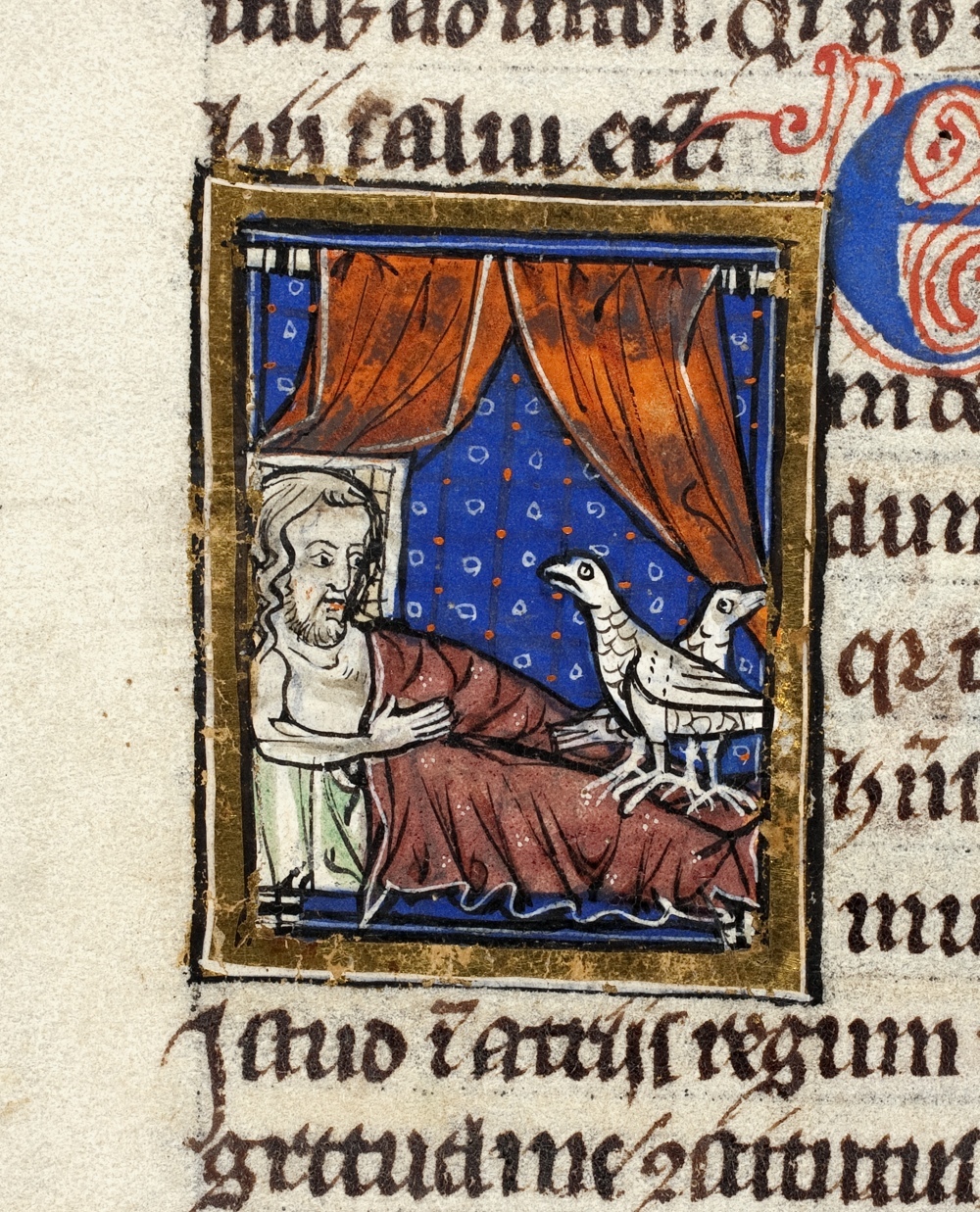
Birds in the Wren

The Caladrius, a mythical bird, heals a sick king. From Trin. Ms. R.14.9

Bird Iconography in a 13th Century English Bestiary

Here's my latest blog post over at the Trinity College Library blog. The text was originally written for an exhibition my colleague and I put together over two years ago, entitled "Birds in the Wren" (ha ha), looking at bird iconography, symbolism and representation from medieval manuscripts to Darwin's finches, to Owl in Winnie the Pooh.

Friday, 9 May 2014

Penumbra shadowing experience at the English Faculty Library

I was lucky enough to do a job shadowing afternoon at the English Faculty Library with Libby Tilley and Helen Murphy on Thursday the 8th of May. The shadowing experience was focused on user education, at my request, and so primarily involved sitting in on a training session entitled “Quickstart for Part 1 dissertations: processes and resources”. This built on a session held in Lent term on building bibliographies using Zotero, so knowledge of this was useful as a prerequisite, though they did cover it again for those who did not attend. The rest of my time at EFL was spent at Issue Desk and in conversation with Helen and Nora, a work experience employee about libraries in Cambridge, the differences in our libraries etc.

The training session

The EFL has a small but very nice IT training suite on site, and this was where the training session was held. There are laptops at each station and the person at the lectern is able to switch from projecting their screen to any of the laptop screens. The laptops can be locked away beneath the surface of the desk when the room is not in use.

The session was a quick overview of the process of planning and writing a dissertation, targeted at first year English students. Its purpose was to allay fears and also introduce students to some of the resources available, particularly those provided by the library. It was based on a hand-out that divided dissertation writing into 5 steps or sections, and each section had a “hook” or useful tidbit that I think students will find memorable when it comes time to start writing. Everything covered was on the hand-out and the services or resources provided by the library are highlighted in a different colour so that students know what the EFL provides. Furthermore, students were asked which section they thought they needed more help on. Responses were a little timid, I think possibly because no one had thought that far ahead yet, so all of the sections were covered.

SECTION 1: Choosing a topic

First, Libby emphasized that in the dissertation the library could help, but that students’ directors of studies/supervisors are gods as far as the dissertation is concerned. However, she pointed out that the first port of call for English students is the “Guidance on dissertations” on the faculty intranet. She recommended reading it over the holidays, since it’s quite comprehensive, and noted that in October there will be an additional and more comprehensive guide to referencing. The second resource she pointed to was a folder of past dissertation topics, which is available to use in the library and can be borrowed from the Issue Desk.

SECTION 2: Planning for effective working

Post-it note exercise - Everyone was handed a post-it note and asked to write one effective working habit they have. A couple of brave volunteers said theirs out loud, but the rest were collected and will be collated and passed on as advice to next year’s first years, so that they are getting advice from their peers rather than tutors, librarians etc.

Libby recommended starting early in case there are niche, hard-to-get resources, but emphasised that the library could get these resources for them if they were given enough warning. Additionally, the library is able to help by performing a literature search. They provide postcards that students fill in with their names and dissertation topics and hand in to the library if they are stuck, if they don’t know where to start, etc. This doesn’t take much staff time but sounds like a really big help to the students. The theory behind having a postcard rather than just giving out an email address is that there is a physical reminder of the service, and because you just fill in the back of the card advertising it and drop it back at the library, it’s a pretty user-friendly way of going about it.

Next, they did a refresher on Zotero, a free piece of referencing software that lives in your browser and recognizes bibliographical information, saves it, and automatically generates bib. references in your chosen format. The final useful advice on planning that was handed on had to do with time management and managing due dates from different libraries through the libraries@cambridge iCal app. (We could easily link to this from the web page and point it out to students who tend to get late fees.)

SECTIONS 3 and 4: Primary Reading and Secondary Reading

Most people indicated that they felt pretty confident with these aspects of dissertation research, but it was interesting to note that most of them had only one or two ports of call and did not cast their nets wider. Also they didn’t know the drawbacks of the databases they used (namely JSTOR and its out of date information, and the fact that many people assume that just because it’s from JSTOR it’s “solid”, so they don’t have to think critically about it). Of the sources listed on the handout, people seemed not to have heard of a few of them, and hadn’t used most of them.

They were given a chance to play around in some of the databases using a topic chosen from a list. This let people get more familiar with things like Project MUSE and LION, which have complementary coverage to what JSTOR provides. They also pointed out the UL’s uncatalogued book search function, which allows you to search for books by ISBN, request they’re moved to the front of the queue, and then have them put on hold for you. Because most people said they felt comfortable in this area, they did not cover every idea listed, but the handout would provide further guidance if people wanted it when it came to doing their literature searches, and it seemed like most people picked up on something new they could use.

SECTION 5: Writing and referencing

Libby once again emphasised the importance of the DoS/supervisor in this process, but pointed out some additional resources and tips, such as Transkills for English and Scrivener.

Overall impressions:

The teaching session worked really well. It never seemed to lag and it wasn’t too overwhelming. I think each section had a memorable hook that students will have come away with, and it was very nicely broken up with activities. I think it’s especially useful giving people the time and encouragement to try at least one new database on their own rather than doing a demo on a projector screen and mandating what they try. The EFL website is also really sensibly laid out with resources grouped by subject and then overarching, key resources like LION, Zetoc, Project Gutenburg, etc. down the side (grouped by primary and secondary resources). The single handout means that students weren’t sent away with loads to read so I think that was a really manageable amount of information overall, and the main starting point, the “Guidelines for Dissertations”, was reiterated at the end so people were reminded where to go first.

Other things I noticed about the EFL

- Duplication of knowledge and abilities: EFL tries to make sure that there is nothing that only one person knows how to do. This makes people’s roles more diverse and ensures that if someone leaves or is on holiday things get done. - Issue Desk entails other duties when the circulation slows down: Made possible by the fact that most users come just before or after lectures so the rest of the time is fairly quiet. Duties include checking the library email and sorting messages into relevant folders, book labelling, book repairs etc. - Issuing is done with RFID tag readers and there is self-issue as well as staffed issue desk, but books issued at the staffed one are still stamped out and in, which slows the process down. - Tea@3, poetry wall, relaxed rules about bags, comfy seats etc. make it a very comfortable library to use, people seem happy to approach library staff. Issue desk is low down, makes it look approachable. (Side note: I hate our Issue Desk. It’s like a fortress of doom.)

What I’ve taken away from the experience

First and foremost I’d say that it’s always worth visiting other libraries. It gets you to question the way you do things, generates ideas and promotes the sharing of knowledge and resources between libraries, which can only be good for the users of those libraries.

Second, I am very interested in and impressed by the reference help that the EFL provides. Not only are there clever and user-friendly schemes like the dissertation topic postcards, but the entire culture and design of the library promotes the impression that the staff are there to support learning, not as an obstacle to it. I think TCL needs to realise that whatever our sentiments about reader services may be, we do not give off a friendly and supportive impression and that should certainly be addressed.

Third, I feel like there is the potential for us to provide support in the form of user education initiatives. They would certainly look different from those at Faculty libraries, as they would not be subject specific, but we could have closer relationships with the directors of studies, point students toward the right sources of information and target our information toward the specific assessments that students of the College are doing. I will brainstorm ways of doing this. If we don’t have space to do it in person I think that we could develop something good online.

If nothing else, I think we should focus on structuring the library to be more approachable and develop some form of reference service, especially in subjects that do not receive that kind of support from their Faculty libraries, and on working more closely with Directors of Studies in the College.

Many thanks to Libby and Helen for letting me sit in/chat with you guys about library things!

Tuesday, 25 February 2014

When it comes to libraries, not all change is (necessarily) bad

Photo by Humans of New York, posted 25th February, 2014.

On Tuesday 25th February, Humans of New York posted a photo of a man eating chicken on the street outside a branch of the New York Public Library as part of their photojournalism series. The man asked that in return for appearing in the photo, they broadcast a message for him:
"I work at this library. And before that, I was coming here for twenty years. It’s my favorite place in the world. As many people know, the main reading room of this library is supported by seven floors of books, which contain one of the greatest research collections in the world. Recently, the library administration has decided to rip out this collection, send the books to New Jersey, and use the space for a lending library. As part of the consolidation, they are going to close down the Mid-Manhattan Library Branch as well as the Science, Industry, and Business Library. When everything is finished, one of the greatest research libraries in the world will become a glorified internet cafe. Now read that back to me."
There was a resulting uproar from library fans around the world commenting in support of the anonymous chicken-eater (Tumblr introduced the tag #angrylibrarianeatingchicken), encouraging people to sign a petition to the mayor to keep the branch open and so on. Such outpourings have had great effect in instances like the Pulaski County Public Libraries and slightly less success in UK branch libraries.

However, this David and Goliath story was not exactly as it first appeared. Humans of New York contacted NYPL and later the same day posted this clarification:

 "Because of all the attention of this morning’s library post, I thought it’d only be fair to post the NYPL’s response. I’m quoting four points that they’ve asked me to clarify:
*The man says “I work at this Library.” Ends up, he doesn’t “work” for the library in the sense of being an employee. He is probably doing his work at the library (millions do each year!). We fear the confusion might make people think he is offering his opinion as an employee.
*The vast majority of research books will remain on the site (in far superior storage conditions)
*None of the public spaces he and others enjoy will change, and we’ll be returning a circulating collection to this main library (it had one for its first 70 years).
*This plan will be greatly expanding access to the library. The renovation will allow all New Yorkers–scholars, students, educators, immigrants, job-seekers– to take advantage of this beautiful building and its world-class collections.
Obviously the issue is more complex than soundbites from either side, so feel free to educate yourself further and form your own opinion:
http://lmgtfy.com/?q=NYPL+renovation+debate"

I wanted to bring this instance to the attention of my reader(s) as an example of the in turns gratifying and infuriating passion some people have for libraries. While I of course laud the intense loyalty many show to libraries, there is often the knee-jerk assumption that any change undertaken by a library is a) the result of budget cuts alone and not influenced by other factors such as demand, usage statistics and so-on, and b) is a change for the worse. Perhaps these people feel protective of libraries, viewing them as both timeless and defenceless, and get a sense of satisfaction from crusading on their behalf.

However, libraries serve very diverse purposes. Some are historical records of a particular collector, institution or country and for them change would be potentially cataclysmic. However, for modern libraries that serve a user base, change is a necessity borne of the changing needs of the communities they serve. Sometimes this means growth and sometimes it means consolidation. I am not familiar enough with the intricacies of this particular branch to comment on its impending changes, but I think it is worthwhile to point out that a conservative attitude toward libraries can actually be worse in the long run, allowing them to slip into irrelevance rather than remaining vital and central to their users' lives.

Libraries are never going to please all of their users, but the assumption that the public knows better than the librarians who are making these decisions is symptomatic of the attitude that dismisses libraries as static institutions and devalues librarianship as a profession. Try talking to librarians about why changes are taking place before jumping to the conclusion that it is for sinister reasons. Libraries are there to serve their communities, so if you have genuine concerns, get in touch with the librarian before starting a campaign. Some libraries do need protecting, but not all change is (necessarily) bad.