Pages

Showing posts with label personal development. Show all posts

Monday, 10 October 2016

23 Research Things - Thing 1

Hello! I'm joining in with 23 Research Things Cambridge and will do my best to post all of the "Things" in a timely manner. Thing 1 is an introduction and a chance to reflect on what we hope to get out of our involvement. I think this also might be a good chance to introduce myself in case any new readers find this blog as a result of the programme.

The author, as viewed through a series of tubes
My name is Kirsten and I'm Assistant Research Support Librarian in an HE Engineering Department. I work with Masters and PhD students and researchers through various phases of the research process, from research ethics to accessing resources to understanding the 21st century academic publishing landscape. I do quite a bit of teaching and one-on-one work as well as developing the online support for our students and academics. While I already do a fair amount of CPD around research, I thought 23 Research Things would be a great chance to find some new ideas and be reflective about my practices.

This is rather timely as I'm looking at revamping my productivity and goal setting at the moment, moving toward an analog system that will allow me to take notes and do more reflective writing with pen and paper by trying out bullet journaling. So I'm already thinking a lot about how I manage my own information and what my personal and professional goals ought to be over the next 6-12 months. The schedule of upcoming Things looks like it will be a good blend of strategies I've thought about a lot and ones I haven't really explored personally. I'm hoping to gain a lot of perspective, both on my role in research support and as a researcher myself.

I'm also looking forward to hearing from other participants - particularly people outside the library world - in order to expand my understanding of the ways in which people do research. Look for regular updates on this blog and I hope to hear what you think as part of this programme!

Tuesday, 2 February 2016

Who are you and what have you done with my Impostor Syndrome?

Raise your hand if any of the following things are true of you:
  • I have regularly worked longer hours than I am contractually required to and/or skipped at least one entire break in a working day.
  • I have intentionally gone to work ill or felt incredibly guilty about calling in sick.
  • I frequently feel worried that my work isn't good enough and that at some point I will be "found out".
  • The more I am praised or recognised for my work, the more pressure I put on myself to live up to my own impossible expectations.
I'm going to have to put my hand down now because it's hard to type. (Which is to say, me too.) I would be embarrassed admitting something so personal but I think it's true of so many people I know in life in general and in libraries specifically. It's something I've been consciously working on for the last year or so but like all progress, it's seldom straightforward.


I won't go into the specifics of why I'm writing about this now, suffice it to say that my co-workers are fantastic and helped me realise pretty quickly that I was working WAY too hard for a couple of weeks and not taking care of myself. Part of it was time pressure and part of it was genuinely enjoying what I was doing enough to not want to switch off at 5:00, but underneath that there was lurking the ever-present sense that I needed to earn my value through productivity.

Important things to remember, by the incomparably lovely Stevie Wilson.
That is not and has never been true. In the comic above I feel like the artist is dealing with a sense of dissatisfaction with her "day job" as a barista, but the same feeling can be present if you love your job. Indeed, I think it's even harder to separate your sense of value from what you do all day when you're passionate about what you do. Being a research support librarian is my dream job and I love it, but that doesn't mean there isn't more to me. And that other stuff is worth cultivating and caring for. You, yourself, alone, doing nothing, accomplishing nothing, have value.

This week a very lovely and helpful person sent me this article, which I of course related to massively and which reminded me about all the work I've been trying to do on keeping everything in balance:

This is just a library. It’s not heart surgery. This work will all be here when we get to it.
So, take a minute and assess your workload and your projects. Are any of them emergencies? Ask your boss for a meeting and ask for help prioritizing the work if you need to. Whatever you do, Shiny New Librarians, do not try and be the hero and overdo it because we need you. We need you to do all of the cool great things you’re doing now, but we also need you to make it into management without being burned out and angry. We need you to run the next generation of libraries and protect the new people from themselves.
- bossladywrites

It's reminded me to be more mindful, to be able to put things aside and know that it will be okay. Nothing's going to catch fire if I don't finish that report RIGHT NOW. It's reminded me that I am sometimes so worried and stressed about living up to expectations that I make it harder for myself to do good and meaningful work. So, I've streamlined things a bit, worked on my task management, tried to reign in a bit of my multi-tasking so that I'm really focused on what I'm doing at any given moment and tried to be more disciplined about actually going home at a reasonable hour. My graph is still more of a squiggly line than a nice straight line, but as long as the squiggles are trending in the right direction I think I'll call it a win! 

I hope that if you put your hand up at the beginning of this post you'll think about what's behind that and remember that you, too, have value as yourself.

Saturday, 11 July 2015

Work/Life Balance

By woodleywonderworks on Flickr

As far as first world, middle class problems go, few are as prevalent and perennial as the problem of balancing one's career with the rest of one's life. The thing is, dividing the problem into two parts - work, and then everything else outside of work - is a tremendous oversimplification. I don't know anyone's life who can be divided so cleanly. Even if you take kids out of the equation (which I have), you still have friends and family, fitness, mental/physical health, cooking, keeping your home and garden under control and maybe even altering it in fairly major ways, hobbies you love, classes you take, travel, decompression time by yourself... the list could go on and on.

Work is not so easily segregated into a single category either when you add to the day-to-day activities things like committees, special projects, long-term goals, professional development, relationships and networking etc. There are certainly times when I feel incredibly motivated to join everything, participate in everything, take on everything, and there are others when I am perfectly content to not have any challenges greater than a trolley of books to be labeled and a stack of archives to reshelve. So how does one cultivate all these disparate facets without burning out?

I used to think that achieving work/life balance involved stumbling upon the magic ratio where one's time was divided up into all the various hobbies, interests, social engagements and professional development activities and that was it. Once you'd settled on The Timetable you were good to go and the reason I hadn't achieved a balance yet was because I needed how to figure out how to divide all the hours of the day. But life doesn't work like that. Plans fall through or crop up unexpectedly, and, more importantly, I don't work like that. I used to think that balance was something I would have to impose upon myself because I'm the sort of person who dives passionately into one thing to the exclusion of others for a while, only to reemerge with a new passion a few weeks or months later.

The revelation for me has been accepting that balance is not a fixed ratio but a point that is constantly shifting beneath me in response to external circumstances and where my own energy and passion is guiding me. 

Balance means keeping some things ticking over with minimal effort/energy expended while I pursue my latest passion, but also recognising that whatever it is, no matter how passionate I am about it at the moment, it isn't the be-all-and-end-all thing I'm going to dedicate the rest of my life to. It's taken me over 30 years to recognise that pattern and understand how to make it work in my favour rather than feeling like it's a fatal flaw that will stop me from ever achieving balance.

Lately I've been working on riding the ebbs and flows of energy and making them work for me. Here's a brief run-down of the different facets that make up work/life balance for me and how I'm learning to maintain them without letting them take over:

Making - Although I'm not very artistically talented in any specific way, creative expression has always been very important to me, whether it's writing, photography, drawing, crafting, dancing, singing or curating (this includes things like putting together Pinterest boards and Spotify playlists). Sometimes I have absolute bucket-loads of creative energy and all I want to do is make stuff. This makes me seek out creative projects at work and/or at home. It's worth knowing that I can happily ride the wave of this creative energy for a while and accomplish a lot in a short space of time but that it will burn out pretty quickly, so I should be careful that I don't start so many things that I can't finish any of them before I dry up. Luckily, this sort of mood comes along pretty regularly so I can pick things up again at a later date when my creative energy is bubbling over again.

Moving - It's taken me a very long time to realise that I derive a huge amount of energy and happiness from being fit and active. As the sort of kid who loathed P.E. and organised sports, it was surprising to get to university and realise that I LOVE working out, I LOVE a physical challenge and I LOVE having a lot of movement in my life. I can turn sloth-like very easily, however, so to keep balance it's important for me to have physical activity be part of a routine. Roller Derby was great for this because even if I didn't feel like going to practice I would still go because it was an obligation. Then I'd invariably have a good time and feel better for it. Without the structure of Roller Derby, I kind of lost motivation for about 6 months, but I now have a personal trainer and I'm getting back into a regular schedule of exercise and feeling a lot better for it. It's good to know how important that discipline and routine of exercise is to my overall well-being so now I will try to keep that in mind as something that should be a part of my life at all times.

Learning - This includes reading, practicing something new, problem-solving, doing something unexpected, basically just introducing something novel into my life. Like "making", this is something that I can do at work by attending classes, developing my skills or just trying to do something in a different way. Sometimes I have a lot of energy to do this, while other times I really don't feel like I can take any more on because I'm getting overwhelmed and can't focus on anything. Once again it's about using the energy while I have it but not taking on too much because I know it won't last indefinitely.

Friends/Family - This one doesn't need too much explanation. If I don't have time to see friends and family, I start to feel super guilty and overwhelmed. Everyone needs time for relationships outside of work and this tends to need to be the most flexible aspect because it depends on when other people are available or need you to be in their lives. In my mind time with friends and family is never time wasted. It's the priority, even if it's not a constant.

For me the most difficult part of trying to strike a balance is accepting that I will not always have the same level of energy for particular activities - that it's a moving, shifting quantity and that my balancing point will differ from week to week or even moment to moment. When I have a lot of energy for a particular activity I find it very difficult to accept that it will change. At the time it feels like I can take on anything and everything and I have almost unlimited enthusiasm for a particular thing. Often it feels like a "Eureka" moment and it seems like I've finally discovered my calling in life as I practically fall in love with whatever the latest thing is. But this has happened so often in my life that I know now to be prepared for the bubble to burst, for reality to set in, and for my enthusiasm to wane as quickly as it arrived. It's not that I have no interest in it anymore, but I just have less energy and passion for it. I've never stopped being interested in astronomy, for example, but I stopped wanting to be an astronaut when I was about 15.

I don't think these things have been a waste of time simply because I didn't go on to "do" anything with them. It's nice to be able to contribute to conversations about astronomy, say, or at least know enough to ask questions of people who know it better than I do. Same with music, history, art and any of the other things I've been passionate about in my life. It's the newness, the learning, the dwelling in beginner's mind that makes it worthwhile. If I'm shaking myself out of routine and getting excited about stuff, it doesn't matter what that stuff is or whether I "do" something with it. At least I've kept things fresh and exciting. Maybe I'll never be a master of any one trade, but at least I'll have had an interesting life and taken advantage of my natural magpie-like tendencies to find my own individual work/life balance.

While you're pursuing your passions it's important to learn how to budget your finite mental energy by making as many other things automatic as possible. That keeps all the facets of your life ticking over at a base rate so that you're not abandoning your friends to do your hobbies, for example, or letting your physical exercise collapse completely when you're diving into a big project at work. The video below is a really good explanation of this idea. I highly recommend it!


So that's what I'm working on at the moment. I can feel myself shifting out of a very work-focused period into a time when I have a lot of physical energy, so I might need to consolidate my projects at work, maybe delegate a few things to my co-workers to keep the momentum going and use this opportunity to reflect on what I've done in the last month or so and what I can do better next time the career energy ramps up again. It might seem a little chaotic from the outside but I'm learning that this really works for me, so I guess I'll run with it!

Saturday, 25 April 2015

Right Livelihood: Becoming a Buddhist Librarian

“Hour by hour resolve firmly to do what comes to hand with dignity, and with humanity, independence, and justice. Allow your mind freedom from all other considerations. This you can do, if you will approach each action as though it were your last, dismissing the desire to create an impression, the admiration of self, the discontent with your lot." 
- Marcus Aurelius, Meditations
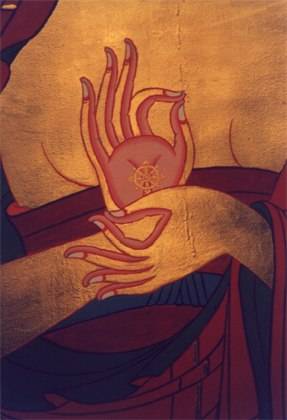
Source: www.tibetanbuddhistaltar.org

I've had a hectic week at work this week what with stressed out students facing their exams, dissertations due, events in the library and lots of smaller projects needing tending. Fortunately, that has propelled me back to my meditative practice, which had tailed off a bit of late. Facing stresses I have faced before with a relatively new set of skills and attitudes has prompted me to think a lot about how my exploration of Buddhism has shaped my approach to my profession over the last year.

The title of this post, "Right Livelihood", derives from one of the core tenets of Buddhism, the Noble Eightfold Path, in which the Buddha prescribed the way to the end of suffering. "Suffering", incidentally, is the most common translation of the Pali word dukkha, but it is not as extreme as we tend to mean it. For instance, I've also seen dukkha translated as "unsatisfactoriness". It refers to that feeling most of us have that something is missing, something could be better, or that we're falling short in some way -  a pervading dissatisfaction with the way our lives are right now that drives us to work harder, to acquire more stuff or to escape from it all. The Noble Eightfold path is a way of being in the world that works to root out the desires and aversions that drive dukkha, and it has echoes in Epicureanism, Stoicism and many other philosophical and religious practices the world over.

The Noble Eightfold Path is both less of a super-human undertaking than it looks and profoundly more difficult than it seems. It is not a set of commandments for how you must be all the time lest you face some divine retribution, nor is it something to which you can simply pay lip service. Walpola Rahula, a Sri Lankan monk and author, wrote that the facets of the Eightfold Path "are to be developed more or less simultaneously, as far as possible according to the capacity of each individual. They are all linked together and each helps the cultivation of the others." [The emphasis is mine.] Right livelihood (which can also be translated as "skilful" or "wise" livelihood), like all of the facets of the Eightfold Path, is not clearly and explicitly defined. Generally speaking it is any undertaking that does good rather than harm, which is ethical according to a Buddhist framework (in general Buddhism does not condone killing, lying, slavery or dealing in intoxicants) and which supports rather than hinders the individual's spiritual practice. However, it is up to the circumstances, the capacity and the judgment of the individual what right livelihood looks like in their own lives.
The Noble Eightfold Path. Source: beliefnet.com
Even with such a broad definition, right livelihood seems to generate anxiety in a lot of modern, especially Western Buddhists. Ted Meissner of the Secular Buddhist podcast has joked that many people seem to think the only right livelihoods available to Buddhists are along the lines of yoga teacher, monk or aquaponic kale farmer. I certainly struggled with this when I first encountered right livelihood, becoming deeply uncomfortable with the feeling that I was reinforcing a system of privilege through my own complicity. Ajahn Brahm observes, however, that, "It's not what you do but how you do it that makes all the difference."

This is the point at which the entire system of the Eightfold Path begins to work together: the "how you do it" point. What Buddhism is teaching me is greater mindfulness of the present moment, detached from old scars and prejudices picked up in the past, removed from perceptions of the future. With greater attentiveness comes greater patience and compassion. This can only be accomplished through good intention and effort. It is the quality of your work that matters, even if you are washing a dish or reshelving a book. If you are doing something with your mind wandering elsewhere, how well are you actually doing that thing? Right livelihood, then, is not connected to one's job title so much as putting one's entire self into one's work, whatever that work happens to be.

The "how you do it" also includes your relationships to other people; to your co-workers and library users. Think about a time when someone in a customer service role smiled at you or went out of their way to be helpful when you were having a bad day. That one small interaction cost them nothing but it improved your day dramatically. Think of all the people you smiled at or helped in your job today. Even if they didn't see you, even if they never know what you did, did you catalogue something in a way that will help a library user find it? Did you make sure the shelves were organised so they could retrieve it quickly? You form part of a service made up of people for the benefit of people. You facilitate the creation of knowledge, the spark of discovery and the joyous, frightening, silly, satisfying experiences of library users. Did you do it well and wisely? Did you bring compassion to your library's services? In terms of my fears that I was reinforcing privilege through my work, I think that unjust systems cannot be changed by turning our backs on them. If I bring compassion to the corner of the world I inhabit, to every person I meet and to the people I will never meet who use my library's services, I think that's all anyone is called on to do in order to make the world a better place. 

The most difficult part of mindfulness for me has been cultivating better self-awareness, including an awareness of my own flaws. It can be very uncomfortable to look at your professional and personal shortcomings, but it is ultimately an incredibly useful exercise. Not only can you learn to work through them or at least to work around them, but if you can look with compassion at the parts of yourself that you dislike the most you can certainly treat others with the same degree of compassion. Acknowledging my own egocentrism and my need for recognition was the most important step toward letting it go. Obviously it's still a work in progress but the minute I stopped shying away from it I was able to shift my perspective on my work and what I wanted to get out of it. It isn't about self-abnegation so much as the recognition that "myself" is no more than a useful construct for interacting with the world that can be let go.

"The beginner's mind is the mind of compassion.When our mind is compassionate, it is boundless." - Shunryu Suzuki

Beginner's mind, or "don't-know mind" is an important approach to life in Buddhism, especially in the various Zen traditions, that is very connected to the idea of letting go of self. Zen teacher Shunryu Suzuki said, "In the beginner's mind there are many possibilities, in the expert's mind there are few." As librarians we often need to market ourselves as experts in particular skills and competences in order to more effectively integrate our services into the teaching activities at our institutions. But while it is important to showcase our professional expertise, it is equally important to cultivate in our own minds a sense of curiosity and openness. Kristen Mastel and Genevieve Innes, two librarians writing about Mindfulness for librarians, argue:
"The benefit of a beginner’s mind, if one can cultivate and achieve it, is that one will then look at the world with fresh eyes, and can rediscover the joy of learning something new, of finding just the right article or book, the deep satisfaction of having a question or curiosity answered, a curiosity sated--experiences which excited one and first drew him into the profession. In beginner’s mind, we understand what it is like to be in new situation, to feel uncertain, to feel vulnerable. In the beginner’s mind, one realizes how important it is to demonstrate patience and understanding with ourselves and others."
Beginner's mind, then, is important to cultivating compassion for our users as well as finding joy in our careers. It can be frightening for information professionals to embrace something like "don't-know mind", but I think that if we are to develop a partnership with library users rather than an expert/novice or gatekeeper/seeker relationship it is important that we learn how not to be experts, to learn how to not know. Our users are the true experts on their needs and goals and approaching them with an open mind ensures that we have the best chance of understanding them.

Source: http://www.buddhistelibrary.org

In a previous post, reflecting on where I am at professionally, I mentioned a shift in focus from self-oriented goals to service-oriented goals. I said that I was no longer focusing on where I wanted to be in my career but what I wanted the library to be like. While searching for other librarians' musings on right livelihood I came across a wonderful article by a recently qualified librarian that I think sums it up perfectly: 

We new librarians need not be enlightened Buddhists to learn something from these teachings about the connection between ego and burnout. We bring high ideals to our work, as we should, but are doomed to burnout if we tie our egos to achieving those goals. We are never going to teach all of our patrons to be critical about their information sources. We will never have the funding to provide all of the information sources our patrons need. We will never convince all of our leaders that information needs to be free. Certainly, we can make progress toward these goals, perhaps tremendous progress, but there will always be more new technologies to master, more information to organize, more information needs to meet. Perhaps we will be able to face this constant onslaught without burnout if our goal is service, not personal accomplishment. - Roberta M. Richards
This resonated with me very profoundly. I was heading for just such a burnout when I began engaging with Buddhism because my ego was tied to goals. I was clinging to what I thought I ought to be, what my library ought to be, and that neither of us were there was a sign of deep personal failure. But the journey of a thousand miles begins with a single step (so says Lao-tzu). There's a Zen proverb I really like that goes as follows:
A young but earnest Zen student approached his teacher and asked the Master, "If I work very hard and diligently, how long will it take for me to find Zen?"
The Master thought about this, then replied, "Ten years."
The student then said, "But what if I work very, very hard and really apply myself to learn fast. How long then?"
Replied the Master, "Well, twenty years."
"But, if I really, really work at it, how long then?" asked the student.
"Thirty years," replied the Master.
"But, I do not understand," said the disappointed student, "Each time that I say I will work harder, you say it will take me longer. Why do you say that?"
Replied the Master, "When you have one eye on the goal, you only have one eye on the path." 
In all of our lives there is work that is right in front of us. It's probably not glamorous or prestigious. We may not earn any recognition or praise for it. But it's there and waiting for our attention. This also means knowing when to set your professional work aside because the work that is in front of you is the crucial work of self-care, of getting enough sleep, of spending time with your friends or hobbies. Right livelihood to me is about doing the work that is in front of you, as Marcus Aurelius said, with humanity, with compassion and with energy. That is where I have found happiness and satisfaction in my work: doing what is in my capacity to do, giving everything I have in that moment, with compassion for myself and others.

And, fortunately, the work is never finished.

I know that this is not everyone's cup of tea so I thank you for bearing with me if you've read this entire post. I hope it's given you something to think about. None of the things I have discussed is really inherently or exclusively Buddhist: they're ideas that can be explored by people of any - or no - belief system. That I am engaging with them through Buddhism is merely a reflection of my own personal resonances and proclivities, but it has been through dedicated engagement with these ideas that I am at the point I am now: both having travelled a great distance and having so much more ground to cover.

Saturday, 6 December 2014

Envisioning a pastoral role for college libraries


I know it's been a while since I've posted, so forgive me for launching into an explanation for that before getting to the main topic of my post. I've been doing a lot of personal (i.e. not necessarily library related) growth and reflection this year, and started another blog about these issues that I have been much better about updating. I suppose I also felt like a bit of a poseur having a library blog as a relatively low-level employee and not having done much Postgrad-Level research. I started this blog with the intention of using it for CPD and networking because as I finished my PGDip in Information and Library Management I very much wanted and, to be perfectly honest, expected to see myself climbing some kind of career ladder with a speed proportional to my enthusiasm. That did not happen and my reaction to that fact has played a large part in the aforementioned personal reflection. I am trying to let go of attachment to "success" and "accomplishment" as they are often measured in our society and trying to do what is in front of me from moment to moment to the best of my ability.

Today I wanted to write, though, about a topic I've been carrying in the back of my mind for a while. It came up in conversation with a colleague from another library yesterday, so I thought I would get some thoughts out about envisioning a role for college libraries.

There are many libraries in Cambridge, the roles of which vary immensely. Broadly speaking, the University Library is a research library with a vast collection of resources at its disposal and is in many ways the nerve centre of all of the libraries, maintaining a broad view of the extensive academic community in Cambridge and related networks beyond. Their role is breadth. The departmental and faculty libraries specialise in particular subjects and the librarians there will be knowledgable about the research environments relevant to their users. Their role is to provide depth.

College libraries are a strange mixture, positioned not exactly between the other two. Because colleges are made up of students and researchers from various departments, college libraries need to provide a breadth of material, but to a sufficient depth to be useful to first years through research fellows. As such, it is difficult to characterise college libraries, especially given the vastly different sizes, resources and cultures of each college. A colleague told me that some view college libraries as not much more than "an extra reading room", i.e. a physical space to sit and work. Given the passion of the college librarians I know and the centrality of the college to the lives of its members, it would be a shame to have such a limited impact on our users.

As such, I have thought for a long time that it would be wonderful for college libraries to occupy a pastoral role in our users' lives, and to develop strategic visions that have that as a central aim. "Pastoral" is most often associated with religious or inter-faith chaplaincy, but I don't think the phrase is inappropriate to college libraries. It evokes the kind of caring environment that takes into consideration a whole person - intellect, body, emotions, consciousness, relationships - in a supportive and non-judgmental way. It is not a didactic, hierarchical teacher/student relationship, nor is it simply service-based, never delving beyond filling book requests and making sure the printer has paper in it.

So what would pastoral care look like in college libraries? That could be the subject of months of brainstorming involving people much smarter and more creative than I am. However, I thought I'd get some ideas out there just as a starting point.

College libraries are located physically "close to home" for students. We're their "home" libraries. In many cases we're probably the first HE library they'll use. While departmental and faculty libraries can offer very targeted, subject specific information literacy interventions, why couldn't we introduce more universal ideas, like critical analysis, time management and understanding their place in the academic landscape? If this is integrated skilfully with tutorial work early in the first year, it could ease the transition into HE and set up early on the idea that the college library is there to support the skills and development of its students.

Garden International School's commitment to student welfare. Source: https://www.gardenschool.edu.my/student-environment/student-welfare-support/
I think there's also something to be said for focusing (as much as possible) on physical comfort, ease of access and social spaces in the library. My library is sadly very lacking in these attributes but I think it's something worth focusing on in the future. Could we provide places for people to relax, chat and eat food while they're taking breaks from working? Could we provide different kinds of seating arrangements, like sofas and floor cushions for people who are not comfortable working at desks? Could we stay open 24/7 since that's something users say they want? Traditionally, we have been more concerned about our physical collections than what our users want, but a library that sees its role as pastoral would do the reverse. The physical collection is important, yes, but only because there are users who give it - and us - a purpose.

Could we also be doing more for general health and wellbeing? It's not uncommon for libraries to offer information literacy instruction these days, but could we offer courses on things like sleep hygiene and stress management? Maybe we could work with Student Welfare departments in the colleges to have borrowable "de-stress kits", quiet chill out spaces and snacks available during exam term. All of these would not just be useful for students but would change our reputation from rule enforcers and book stampers to active supporters of their educational and personal development.

From "De-Stress Fest 2014" at Langara Library. Source: http://www.langara.bc.ca/library/news/articles/11212014-destress-fest.html
As the information environment becomes more complex and so-called "digital natives" are expected to arrive at Cambridge pre-loaded with all sorts of skills and literacies, it's important to remember the individuals behind those assumptions are often confused, self-conscious, frightened or overwhelmed. As a college librarian I would love to have a more hands-on role in my students' lives, creating safe spaces for them to develop research skills, knowing what's going on with their tutorials, what their schedules are like, what's stressing them out, what they're doing to relax, etc. in order to anticipate their needs. I want to have more opportunities to show compassion to library users, developing programmes and services that will not just give them what they need to grow as academics but will improve their quality of life. Should college libraries be able to do this? Is it even possible?

I don't see why not.

Thursday, 2 January 2014

Time management: Pay yourself first

A pie chart showing various activities and the time spent on each
Where does the time go? Image by cmcbrown on Flickr


The title of this post comes from my High School Economics teacher, Mr. Shannon. From his list of what I'm sure were very astute financial tips, most of which are long-forgotten, this one has always stuck in my mind most firmly. I found myself thinking about it while considering how I'm going to balance my time over the coming year between work, roller derby, my personal life and working on career development and my book.

The idea behind "Pay yourself first" is this: as you earn money, no matter how small the amount, always put something aside into a savings account before spending it on the month to month costs, a new outfit or whatever (I've not been brilliant at doing this lately, but that is beside the point).

Time management is all about priorities. Of course some priorities are non-negotiable. I will always need to turn up to my full-time job, and I will always need to get exercise. However, it is the negotiable, unstructured time that needs to be carefully managed, particularly if you have some kind of non-work project, skill, etc. that you want to make progress with. It is extremely easy to lose hours to surfing the internet, watching TV, browsing in a bookshop etc. All of that is fine, even necessary sometimes, but it can be the enemy of anything you want to do outside the normal spheres of work, home, friends and clubs/sports/organisations.

That's why I think it's a good idea to "Pay yourself first" - make regularly scheduled time for those other projects like professional development reading, writing your book, perfecting your cooking, practicing piano, or whatever it is you want to make progress with in your own time - and STICK WITH IT. Treat that time as non-negotiable. You may feel like you're missing out on time with friends, or TV you want to watch (seriously, just binge watch it when it comes out on DVD, guys), or whatever, but you picked your priorities so you only have yourself to blame.

My partner suggested that we have a "professional development hour" once a week where we read or write something tangentially job-related and then discuss it with each other. I'm hoping we actually do this because it means that is time during which I can't do anything else but make progress on my own things and I'll have the chance to reflect by talking to my very smart and sympathetic partner about it. Hopefully I'll be better at that than the financial version.