Pages

Monday, 19 May 2014

Birds in the Wren

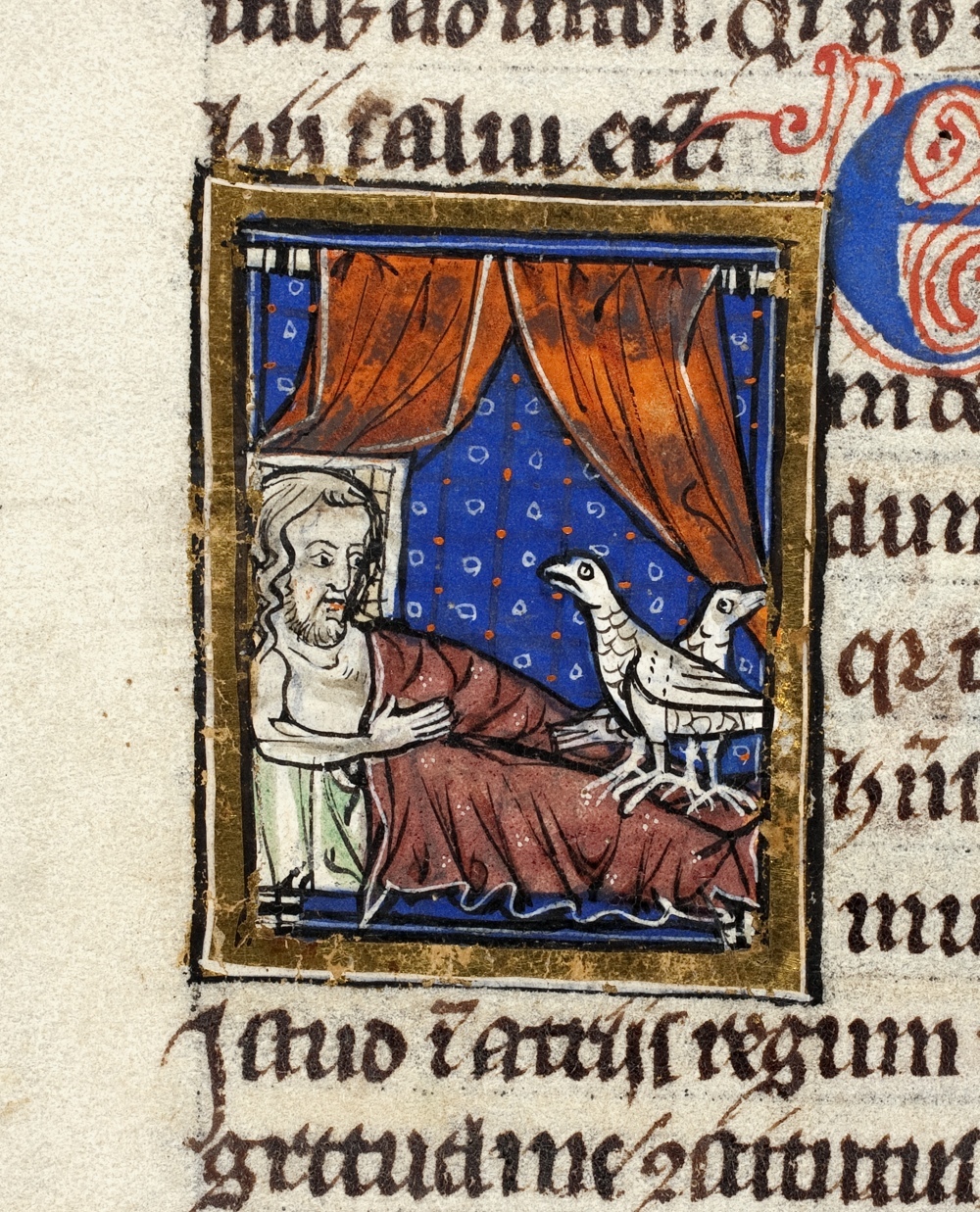
The Caladrius, a mythical bird, heals a sick king. From Trin. Ms. R.14.9

Bird Iconography in a 13th Century English Bestiary

Here's my latest blog post over at the Trinity College Library blog. The text was originally written for an exhibition my colleague and I put together over two years ago, entitled "Birds in the Wren" (ha ha), looking at bird iconography, symbolism and representation from medieval manuscripts to Darwin's finches, to Owl in Winnie the Pooh.

Friday, 9 May 2014

Penumbra shadowing experience at the English Faculty Library

I was lucky enough to do a job shadowing afternoon at the English Faculty Library with Libby Tilley and Helen Murphy on Thursday the 8th of May. The shadowing experience was focused on user education, at my request, and so primarily involved sitting in on a training session entitled “Quickstart for Part 1 dissertations: processes and resources”. This built on a session held in Lent term on building bibliographies using Zotero, so knowledge of this was useful as a prerequisite, though they did cover it again for those who did not attend. The rest of my time at EFL was spent at Issue Desk and in conversation with Helen and Nora, a work experience employee about libraries in Cambridge, the differences in our libraries etc.

The training session

The EFL has a small but very nice IT training suite on site, and this was where the training session was held. There are laptops at each station and the person at the lectern is able to switch from projecting their screen to any of the laptop screens. The laptops can be locked away beneath the surface of the desk when the room is not in use.

The session was a quick overview of the process of planning and writing a dissertation, targeted at first year English students. Its purpose was to allay fears and also introduce students to some of the resources available, particularly those provided by the library. It was based on a hand-out that divided dissertation writing into 5 steps or sections, and each section had a “hook” or useful tidbit that I think students will find memorable when it comes time to start writing. Everything covered was on the hand-out and the services or resources provided by the library are highlighted in a different colour so that students know what the EFL provides. Furthermore, students were asked which section they thought they needed more help on. Responses were a little timid, I think possibly because no one had thought that far ahead yet, so all of the sections were covered.

SECTION 1: Choosing a topic

First, Libby emphasized that in the dissertation the library could help, but that students’ directors of studies/supervisors are gods as far as the dissertation is concerned. However, she pointed out that the first port of call for English students is the “Guidance on dissertations” on the faculty intranet. She recommended reading it over the holidays, since it’s quite comprehensive, and noted that in October there will be an additional and more comprehensive guide to referencing. The second resource she pointed to was a folder of past dissertation topics, which is available to use in the library and can be borrowed from the Issue Desk.

SECTION 2: Planning for effective working

Post-it note exercise - Everyone was handed a post-it note and asked to write one effective working habit they have. A couple of brave volunteers said theirs out loud, but the rest were collected and will be collated and passed on as advice to next year’s first years, so that they are getting advice from their peers rather than tutors, librarians etc.

Libby recommended starting early in case there are niche, hard-to-get resources, but emphasised that the library could get these resources for them if they were given enough warning. Additionally, the library is able to help by performing a literature search. They provide postcards that students fill in with their names and dissertation topics and hand in to the library if they are stuck, if they don’t know where to start, etc. This doesn’t take much staff time but sounds like a really big help to the students. The theory behind having a postcard rather than just giving out an email address is that there is a physical reminder of the service, and because you just fill in the back of the card advertising it and drop it back at the library, it’s a pretty user-friendly way of going about it.

Next, they did a refresher on Zotero, a free piece of referencing software that lives in your browser and recognizes bibliographical information, saves it, and automatically generates bib. references in your chosen format. The final useful advice on planning that was handed on had to do with time management and managing due dates from different libraries through the libraries@cambridge iCal app. (We could easily link to this from the web page and point it out to students who tend to get late fees.)

SECTIONS 3 and 4: Primary Reading and Secondary Reading

Most people indicated that they felt pretty confident with these aspects of dissertation research, but it was interesting to note that most of them had only one or two ports of call and did not cast their nets wider. Also they didn’t know the drawbacks of the databases they used (namely JSTOR and its out of date information, and the fact that many people assume that just because it’s from JSTOR it’s “solid”, so they don’t have to think critically about it). Of the sources listed on the handout, people seemed not to have heard of a few of them, and hadn’t used most of them.

They were given a chance to play around in some of the databases using a topic chosen from a list. This let people get more familiar with things like Project MUSE and LION, which have complementary coverage to what JSTOR provides. They also pointed out the UL’s uncatalogued book search function, which allows you to search for books by ISBN, request they’re moved to the front of the queue, and then have them put on hold for you. Because most people said they felt comfortable in this area, they did not cover every idea listed, but the handout would provide further guidance if people wanted it when it came to doing their literature searches, and it seemed like most people picked up on something new they could use.

SECTION 5: Writing and referencing

Libby once again emphasised the importance of the DoS/supervisor in this process, but pointed out some additional resources and tips, such as Transkills for English and Scrivener.

Overall impressions:

The teaching session worked really well. It never seemed to lag and it wasn’t too overwhelming. I think each section had a memorable hook that students will have come away with, and it was very nicely broken up with activities. I think it’s especially useful giving people the time and encouragement to try at least one new database on their own rather than doing a demo on a projector screen and mandating what they try. The EFL website is also really sensibly laid out with resources grouped by subject and then overarching, key resources like LION, Zetoc, Project Gutenburg, etc. down the side (grouped by primary and secondary resources). The single handout means that students weren’t sent away with loads to read so I think that was a really manageable amount of information overall, and the main starting point, the “Guidelines for Dissertations”, was reiterated at the end so people were reminded where to go first.

Other things I noticed about the EFL

- Duplication of knowledge and abilities: EFL tries to make sure that there is nothing that only one person knows how to do. This makes people’s roles more diverse and ensures that if someone leaves or is on holiday things get done. - Issue Desk entails other duties when the circulation slows down: Made possible by the fact that most users come just before or after lectures so the rest of the time is fairly quiet. Duties include checking the library email and sorting messages into relevant folders, book labelling, book repairs etc. - Issuing is done with RFID tag readers and there is self-issue as well as staffed issue desk, but books issued at the staffed one are still stamped out and in, which slows the process down. - Tea@3, poetry wall, relaxed rules about bags, comfy seats etc. make it a very comfortable library to use, people seem happy to approach library staff. Issue desk is low down, makes it look approachable. (Side note: I hate our Issue Desk. It’s like a fortress of doom.)

What I’ve taken away from the experience

First and foremost I’d say that it’s always worth visiting other libraries. It gets you to question the way you do things, generates ideas and promotes the sharing of knowledge and resources between libraries, which can only be good for the users of those libraries.

Second, I am very interested in and impressed by the reference help that the EFL provides. Not only are there clever and user-friendly schemes like the dissertation topic postcards, but the entire culture and design of the library promotes the impression that the staff are there to support learning, not as an obstacle to it. I think TCL needs to realise that whatever our sentiments about reader services may be, we do not give off a friendly and supportive impression and that should certainly be addressed.

Third, I feel like there is the potential for us to provide support in the form of user education initiatives. They would certainly look different from those at Faculty libraries, as they would not be subject specific, but we could have closer relationships with the directors of studies, point students toward the right sources of information and target our information toward the specific assessments that students of the College are doing. I will brainstorm ways of doing this. If we don’t have space to do it in person I think that we could develop something good online.

If nothing else, I think we should focus on structuring the library to be more approachable and develop some form of reference service, especially in subjects that do not receive that kind of support from their Faculty libraries, and on working more closely with Directors of Studies in the College.

Many thanks to Libby and Helen for letting me sit in/chat with you guys about library things!
Thursday, 8 May 2014

Words and 'wordless'

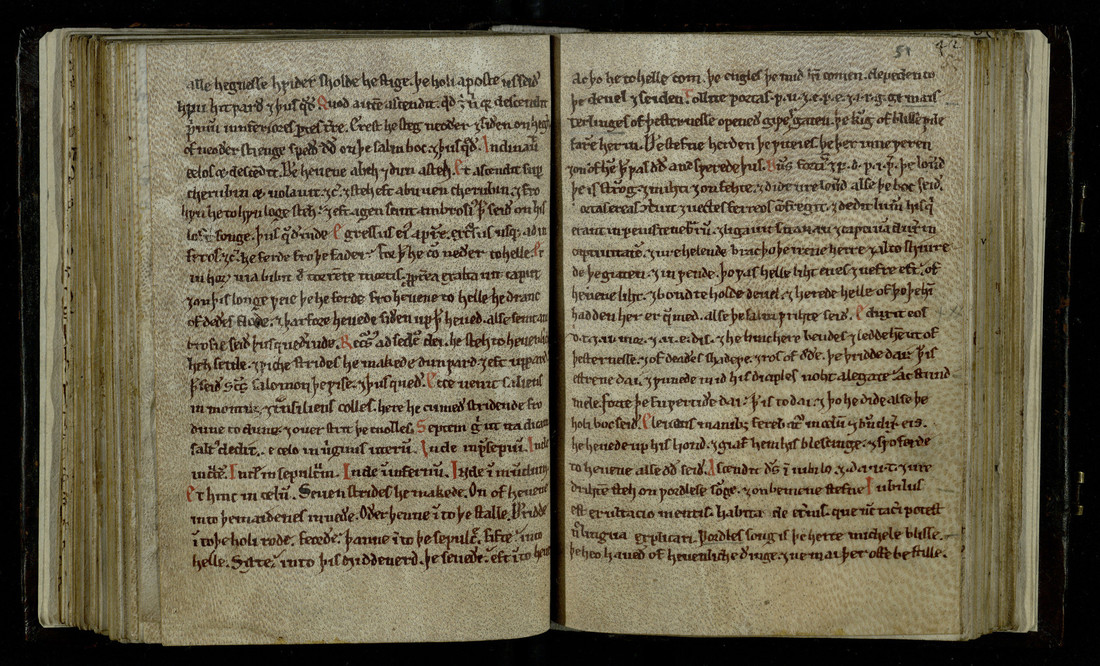
The folio from B.14.52 containing the word “wordless” as quoted in the Oxford English Dictionary. It is located at the bottom of the right hand page.

I just wanted to share a blog post I wrote for work. I'm pretty pleased with it.

View it here.

Tuesday, 25 February 2014

When it comes to libraries, not all change is (necessarily) bad

Photo by Humans of New York, posted 25th February, 2014.

On Tuesday 25th February, Humans of New York posted a photo of a man eating chicken on the street outside a branch of the New York Public Library as part of their photojournalism series. The man asked that in return for appearing in the photo, they broadcast a message for him:
"I work at this library. And before that, I was coming here for twenty years. It’s my favorite place in the world. As many people know, the main reading room of this library is supported by seven floors of books, which contain one of the greatest research collections in the world. Recently, the library administration has decided to rip out this collection, send the books to New Jersey, and use the space for a lending library. As part of the consolidation, they are going to close down the Mid-Manhattan Library Branch as well as the Science, Industry, and Business Library. When everything is finished, one of the greatest research libraries in the world will become a glorified internet cafe. Now read that back to me."
There was a resulting uproar from library fans around the world commenting in support of the anonymous chicken-eater (Tumblr introduced the tag #angrylibrarianeatingchicken), encouraging people to sign a petition to the mayor to keep the branch open and so on. Such outpourings have had great effect in instances like the Pulaski County Public Libraries and slightly less success in UK branch libraries.

However, this David and Goliath story was not exactly as it first appeared. Humans of New York contacted NYPL and later the same day posted this clarification:

 "Because of all the attention of this morning’s library post, I thought it’d only be fair to post the NYPL’s response. I’m quoting four points that they’ve asked me to clarify:
*The man says “I work at this Library.” Ends up, he doesn’t “work” for the library in the sense of being an employee. He is probably doing his work at the library (millions do each year!). We fear the confusion might make people think he is offering his opinion as an employee.
*The vast majority of research books will remain on the site (in far superior storage conditions)
*None of the public spaces he and others enjoy will change, and we’ll be returning a circulating collection to this main library (it had one for its first 70 years).
*This plan will be greatly expanding access to the library. The renovation will allow all New Yorkers–scholars, students, educators, immigrants, job-seekers– to take advantage of this beautiful building and its world-class collections.
Obviously the issue is more complex than soundbites from either side, so feel free to educate yourself further and form your own opinion:
http://lmgtfy.com/?q=NYPL+renovation+debate"

I wanted to bring this instance to the attention of my reader(s) as an example of the in turns gratifying and infuriating passion some people have for libraries. While I of course laud the intense loyalty many show to libraries, there is often the knee-jerk assumption that any change undertaken by a library is a) the result of budget cuts alone and not influenced by other factors such as demand, usage statistics and so-on, and b) is a change for the worse. Perhaps these people feel protective of libraries, viewing them as both timeless and defenceless, and get a sense of satisfaction from crusading on their behalf.

However, libraries serve very diverse purposes. Some are historical records of a particular collector, institution or country and for them change would be potentially cataclysmic. However, for modern libraries that serve a user base, change is a necessity borne of the changing needs of the communities they serve. Sometimes this means growth and sometimes it means consolidation. I am not familiar enough with the intricacies of this particular branch to comment on its impending changes, but I think it is worthwhile to point out that a conservative attitude toward libraries can actually be worse in the long run, allowing them to slip into irrelevance rather than remaining vital and central to their users' lives.

Libraries are never going to please all of their users, but the assumption that the public knows better than the librarians who are making these decisions is symptomatic of the attitude that dismisses libraries as static institutions and devalues librarianship as a profession. Try talking to librarians about why changes are taking place before jumping to the conclusion that it is for sinister reasons. Libraries are there to serve their communities, so if you have genuine concerns, get in touch with the librarian before starting a campaign. Some libraries do need protecting, but not all change is (necessarily) bad.

Thursday, 30 January 2014

My latest book haul from the UL

History and the Disciplines: The Reclassification of Knowledge in Early Modern Europe
Reinventing Knowledge: From Alexandria to the Internet
Literature, Language, and the Rise of the Intellectual Disciplines in Britain, 1680-1820
Critical Thinking: An Exploration of Theory and Practice
Just Being Difficult?: Academic Writing in the Public Arena

Tuesday, 28 January 2014

Great informative video on LinkedIn by the Cambridge Judge Business School

Who better to give you the run down on how to use professional networking tools like LinkedIn than librarians at a business school? I watched this video and brought my LinkedIn profile up from "beginner" to "expert" level in one evening! Meg and Andy explain why LinkedIn is a good tool and how to make the most of it. I highly recommend watching it, especially if you feel a bit flummoxed by LinkedIn.


(I'm well aware this sounds like a paid advertisement - it is not. I just love sharing informative resources! Because I'm weird.)

Friday, 24 January 2014

The Terrible Inevitability of the Past

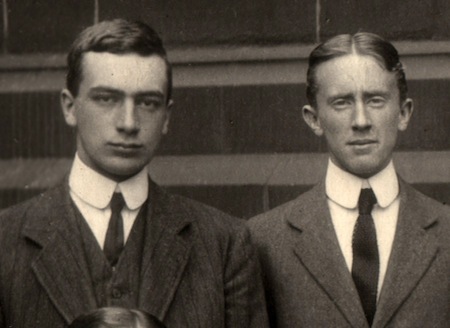
Robert Quilter Gilson was at King Edward's School, Birmingham with J.R.R. Tolkien, part of his close-knit group of friends who called themselves the T.C.B.S. While Tolkien went to Oxford, Gilson went to Trinity College, Cambridge in 1912 to read classics. When Britain entered The Great War in 1914, Gilson entered the Cambridge University Officer's Training Corps, and was shipped out to France with the Cambridgeshires in 1915. A reluctant but beloved officer, Gilson was also a prolific letter writer, to his school friends, his family and his sweetheart, Estelle King, and wrote nearly daily from the trenches. Gilson was killed by a shell while leading his men over the top on the first day of the Battle of the Somme, 1st July, 1916. Friend and fellow officer Andrew Wright wrote to Gilson's father, "It was the final but not the first triumph over his sensitive nature - He alone is brave who goes to face everything with a full knowledge of [his own] cowardice." (Excerpted in Garth, Tolkien and the Great War.)

R.Q. Gilson (left) with J.R.R. Tolkien in 1910 or 1911 (image from www.johngarth.co.uk)
I've been researching Gilson for an exhibition I'm helping to prepare on Trinity and members of Trinity in WWI. I wanted to find someone to focus on who wrote letters from the trenches and could speak, not to a spirit of the age, but for himself, and found Gilson in the pages of John Garth's excellent biography Tolkien and the Great War: The Threshold of Middle Earth. I've been looking through Trinity's archives and other records for mentions of him and have found relatively little, but have had a few nice surprises, for example a drawing he did of the cloisters beneath the Wren Library appeared in Trinity Magazine in 1914 in a section called "Artwork by Undergraduates". The past few days I have been doing this kind of work; chasing leads and scouring records, feeling more like a historian than a librarian for the time being.

Today, as part of my research, I looked Gilson up in the college Admissions Book, mostly to find the name of his tutor, as I already had a fair amount of information about him from other sources. After silently cursing my predecessors for not having students fill in their details alphabetically by surname as I do at the beginning of each Michaelmas Term, I found his entry and was surprised by the emotion I felt on seeing Gilson's details in his own handwriting, his curling script leaning slightly to the left in that upright early 20th century hand. It was as if after the time spent chasing after scraps of evidence of his existence, I turned a corner to meet him face to face. I thought about all the young men and women who I see signing the latest incarnation of the Admissions Book each year and imagined Gilson (I admit, I call him Rob in my head) in the same situation, brimming with possibility and purpose, but in this case I know what lays in store for him, unguessed by any of his peers. He has four years left after writing his details in the regimented columns of this book.

Four years.

Most of what I know of him comes from John Garth's biography of Tolkien, but I have the impression of a generous friend, a kind, caring, eloquent young man with a talent for drawing and painting. He got so little chance to leave his mark, but he left one just the same. I've reached 1914 in the Cambridge Review searching for Rob's name, and behind the articles about donations of books for the Field Hospital in Nevile's Court, Trinity, a Royal visit to the Leys School and sudden anti-German sentiments there are the statistics, the falling undergraduate numbers and the growing lists of names. And each of those names was another Rob Gilson - perhaps not as eloquent or artistic, perhaps not so fiercely beloved - but a young man full of potential.

Lieutenant R.Q. Gilson of the 11th Battalion Suffolk Regiment (known as "the Cambridgeshires" - image from http://www.curme.co.uk/p.htm)
I do not want to argue that World War I was good or bad, or that nationalism is foolish. My own pacifist feelings are, after all, a legacy that this war, the Great War, gave to the modern world. It's as irresponsible to judge people in 1914 for going proudly to war as it is to judge people predating the germ theory of disease for not washing their hands. I have little patience for people who indulge in this kind of retrospective superiority. But I do mourn what these men might have been. I want people who see our exhibition to know of someone like Rob Gilson, to see the awful gap he left in the world when he died in a field near Albert, France in July, 1916.

One has indeed personally to come under the shadow of war to feel fully its oppression; but as the years go by it seems now often forgotten that to be caught in youth by 1914 was no less hideous an experience than to be involved in 1939 and the following years. By 1918, all but one of my close friends were dead.
— J.R.R. Tolkien, forward to The Lord of the Rings
If you want to read more about him, an article excerpting Rob Gilson's letters was written by John Garth and published in Tolkien Studies.